When the League Goes Quiet, You Build Your Own Stage
How ISKL's Dr. Chika Kumashiro-Wilms sparked a city-wide service and sustainability summit. And why it keeps coming back.

Emerging from the shadow of sport and academics, traction for the annual student-led service and sustainability summit at ISKL has been gained through a deliberate investment of effort led by Dr. Chika Kumashioro-Wilms in partnership with some committed colleagues and supported by Inspire Citizens.
There is a particular kind of exhaustion that comes from doing something important that struggles for popularity among flashier alternatives. Dr. Chika Kumashiro-Wilms knows it well. As CAS and High School Service and Sustainability Coordinator at the International School of Kuala Lumpur (ISKL), she has spent years navigating a school culture that is, by her own honest account, institutionally oriented toward academic results, sport, and the arts. And for several years – particularly after the COVID pandemic – service and sustainability events have been quietly dropped from the regional league of international schools her school belongs to.
So Chika did what educators with deep conviction tend to do: she found another way.
Finding Space to Plant the Seed
The challenge was structural, not personal. When students are pursuing IB diplomas, training for competitive sport and building arts portfolios, Saturday summits for community engagement do not top the priority list. Teacher time is similarly constrained. Contractual co-curricular commitments leave little room for anything additional. "Many High School colleagues struggle to find time to be a part of this," Chika reflects. "People are just so tied with their teaching and program obligations."
And yet she believed, and still believes, that students genuinely care about the world. The challenge was not motivation, but instead it was architecture. Without a structure, that care had nowhere to land.
The solution arrived through a colleague from the elementary division, whose daughter was just beginning the IB diploma. She knew about an Inspire Grant offered through the ISKL PTA for guest speakers and special events. She pushed Chika to apply. They went for it. They got it.
Enlisting Support and Launching the Prototype
With that grant in hand, Chika reached out to Aaron Moniz from Inspire Citizens, whose facilitation work she had seen firsthand in professional development settings. She asked him to be the connective element for the event: someone who could bring together students from completely different schools, backgrounds, and languages, and meet them where they were. "We absolutely needed his presence," she says. “With regard to the Design Thinking and Service Learning Cycle, he was able to put everybody on the same page, even though participants were coming from different understandings and backgrounds." Aaron's SDG-anchored facilitation was grounded in shared curiosity rather than charity. And it gave the summit its foundation. His approach, Chika notes, moved away from a haves-and-have-nots framing toward one of human connection: students meeting students, caring about common issues. "His way of reaching out to people is very down to earth," she says. "We really wanted to frame this with human interaction through the creation of meaningful action pitches."
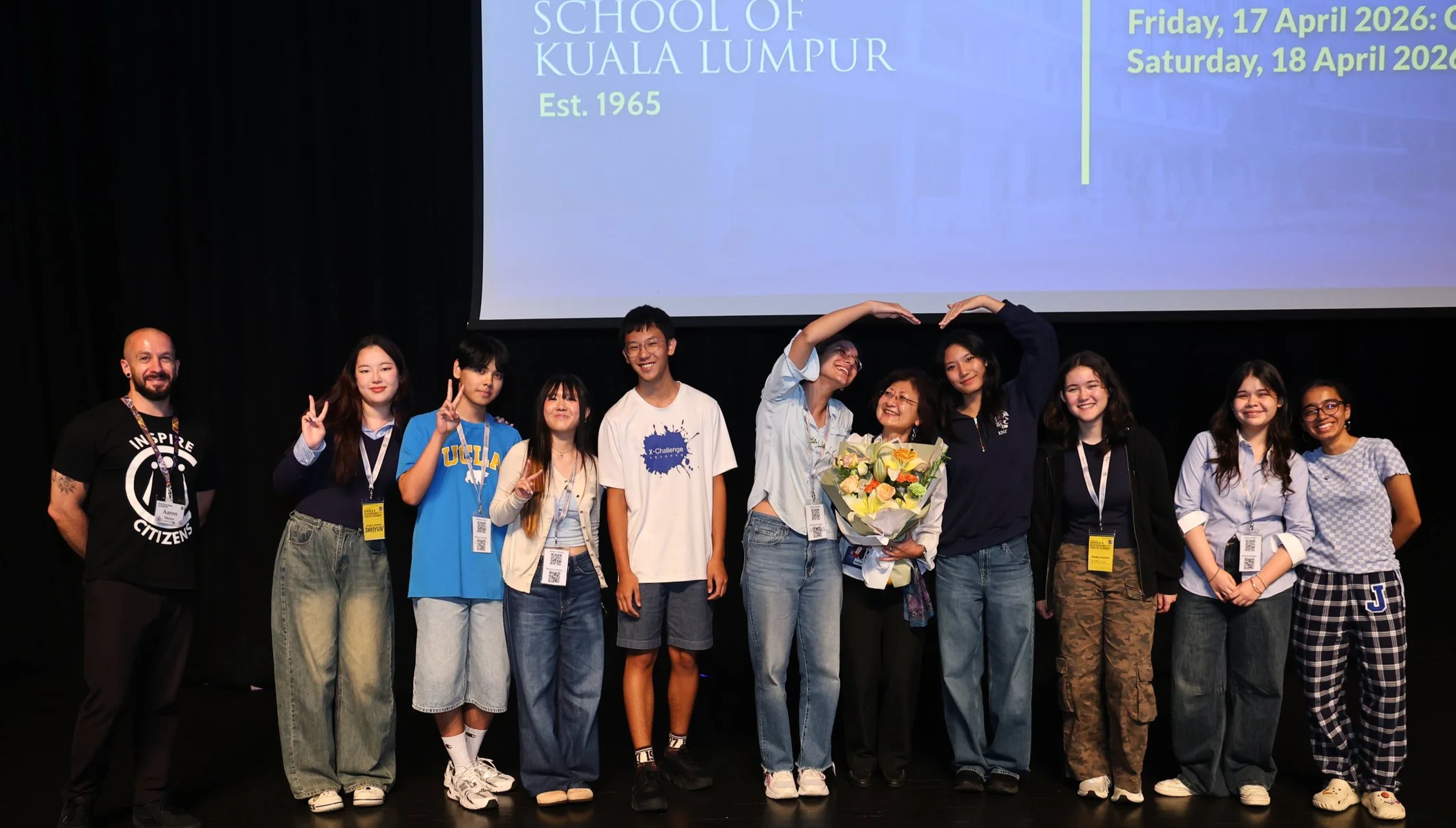
Inspire Citizens Co-founder Aaron Moniz was engaged to play a central role in facilitating the success of the ISKL Service and Sustainability Council’s student-led summit. (image supplied)
The first summit brought together 150 participants from international schools, local schools, and refugee learning centers in the Kuala Lumpur region. The second, held in April, expanded the inclusion of refugee schools further, with students from Afghan, Pakistani, Somalian, Ethiopian and Chin State Myanmarese backgrounds joining alongside other international and Malaysian peers. Workshop providers came from NGOs in animal protection, refugee empowerment and social entrepreneurship as well as hospice care, the biochemical industry and even an athletic federation. The unlikely highlight that nobody wanted shortened even as the day’s schedule started to slip was a cornhole treasure hunt designed and led by the school’s Service and Sustainability Council students. It used borrowed equipment from the PE department to support a fun and collaborative activity aimed at solving real-life sustainability issues.
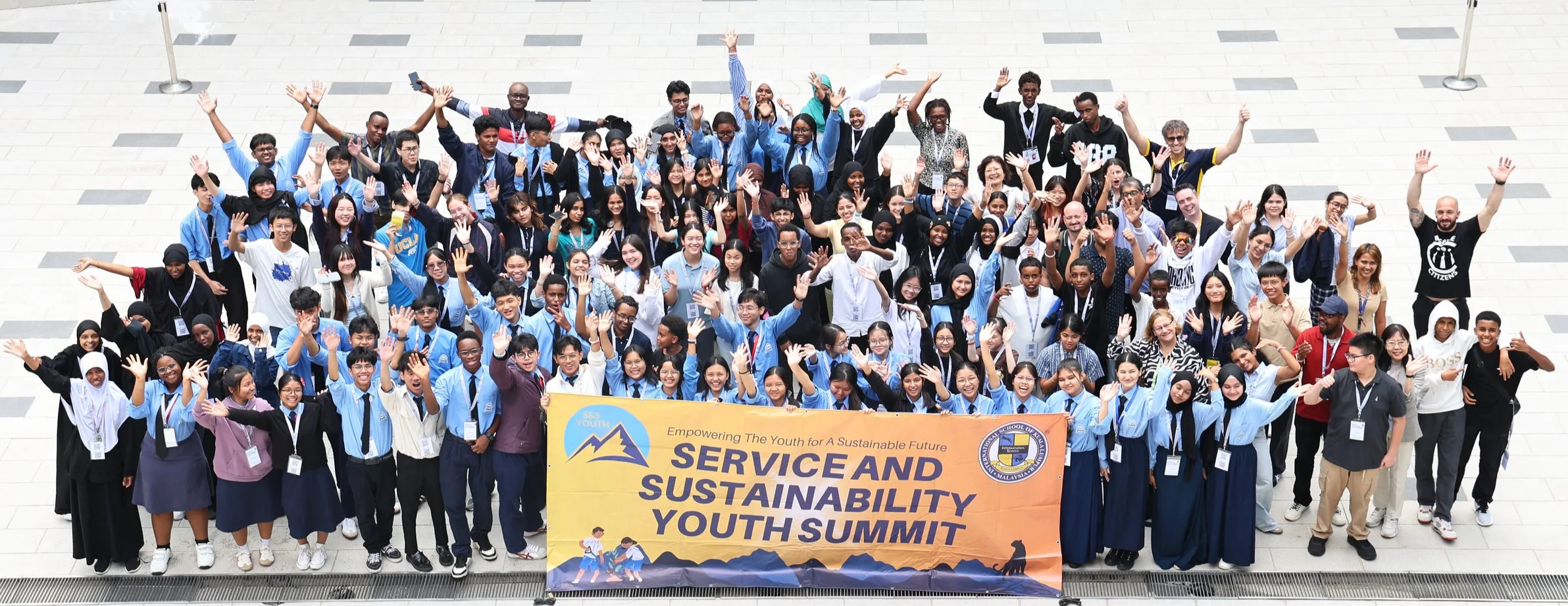
A podium large enough for all: When youth come together for service and sustainability, in the words of at least one attendee, “there is hope.” (image supplied)
Inventory of Immediate and Lasting Outcomes
What came out the other side surprised even Chika. One workshop facilitator who had planned to present about refugee issues realized upon reviewing the guest list discovered that half her participants were themselves refugees. She pivoted and opened the session for authentic input from students who brought their real-world reflections. Workshop leaders who usually dashed away stayed for lunch and got acquainted with each other. The Badminton World Federation shared extra kits with a refugee learning centre school teacher on the spot. Alumni came back to both participate and present. Administrators showed up. "Everybody saw: kids are kids. People are people," Chika recalls. "The participants said, there is hope. We want to come back."
Back at school, the ripples continued. A student service council The Service and Sustainability Council, central to the summit leadership, was finally able see their initiative to stamp cards at the school’s coffee shop for customers who refused plastic containers (inspired by previous summit pitches) was still running after months of reaching out to the school’s Shared Services and catering company. The councill, despite being one of the quietest and most introverted groups Chika had ever worked with, went on to win a 2,000 USD IB Global Youth Action Fund grant. One student, who was really understated, became the leader for the GYAF grant after their second attempt this year
Planning for Permanence
The date for the third summit is already set, penciled into next April's calendar before the second one had even cooled down. "By having it built into the structure every year," Chika says, "it becomes a matter of routine. And routine doesn't need to be boring. Routine is actually a good thing. You grow it. You continue to look into the future for the potential and the wider opportunities."
For other service and sustainability coordinators working in schools where grades and sport take the foreground, Chika's story offers something practical: you do not wait for the league to make space. You apply for the grant. You reach out to the right people to support your vision. You trust that the students, even the quiet ones, know more than they let on. And you set the date for next year before anyone can talk you out of it.