Not Just on the Wall: Year Two of Community Engagement at Seoul Foreign School
While MYP Coordinator Kristin Hexter did not design Seoul Foreign School's middle school community engagement program, she is deeply invested in its success. And as this portfolio of responsibility came to her one year ago (alongside the role of MS Assistant Principal Academics), another major sea change was underway. The school had just folded its British school section into the middle school and sent roughly a hundred additional students through the door.
"I did inherit the program for sure," she says as she reaches for the words to frame the scope of everything. "And, it's a big initiative… a very big initiative."
Kristin is Assistant Principal of the Middle School for Academics and MYP Coordinator across grades six to ten. The program she picked up sits at the junction of two vectors. The first element is the IB's move from service as action toward community engagement, away from what "oftentimes in the previous system kind of became this checkbox exercise.” And the second piece is a merger that carried with it a British school service learning culture students already loved.
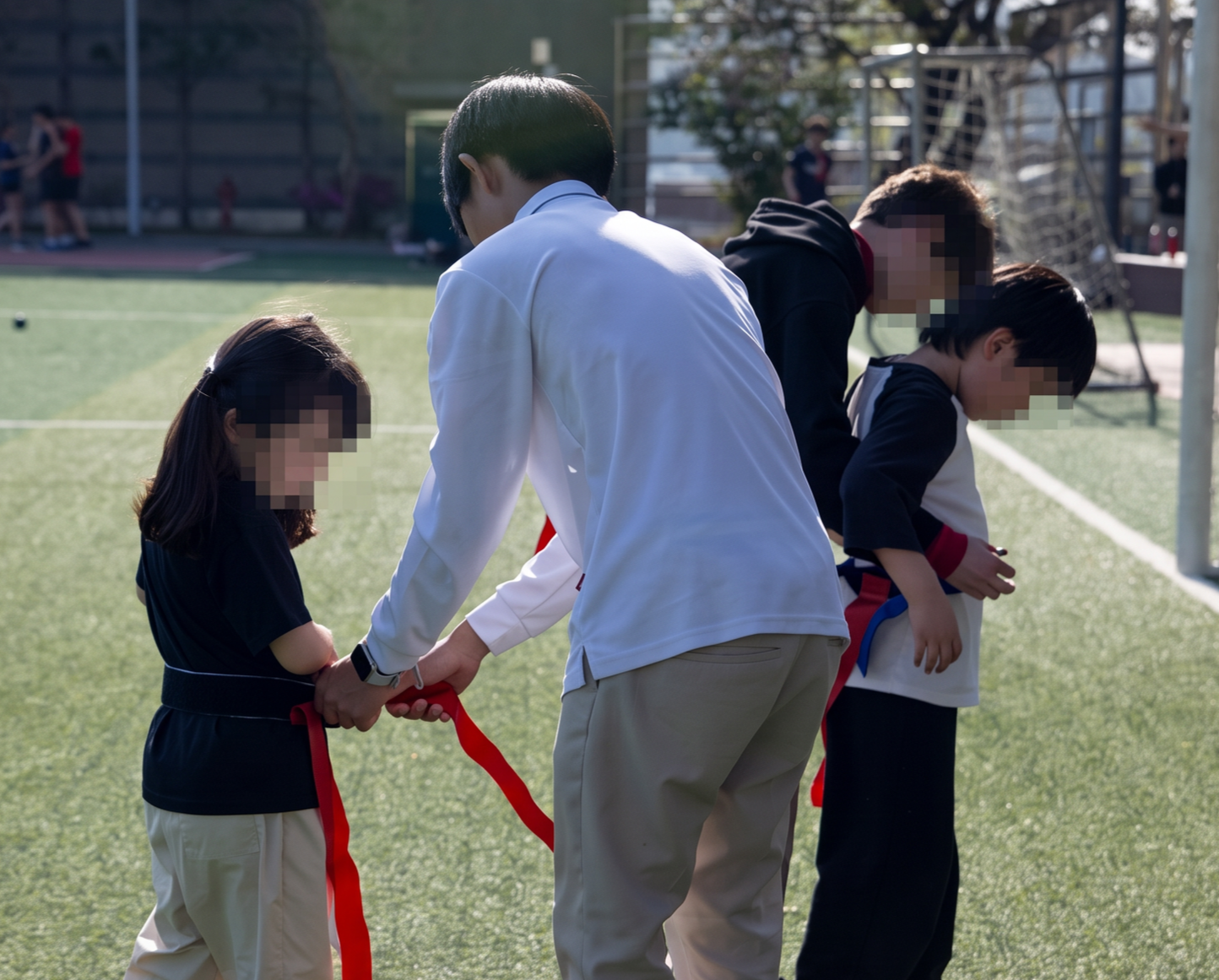
Seoul Foreign School features a robust, systemic Community Engagement (CE) and service-learning framework integrated directly into its curriculum. SFS works closely with local Seodaemun-gu government welfare offices and neighborhood Kium Hub Centers. Students pictured above are sharing their passion for flag football. (image supplied)
She is clear about why the work matters to her. "Part of our mission is being in service of others. And I know missions can kind of just live on the wall, but if there’s one thing I love about Seoul Foreign School is that it doesn't just live on the wall. We really were always striving to walk the walk and not just the talk."
First, protect the time
The foundational structural decision was to give the work its own place in the timetable rather than hoping it would find a home inside subjects. "We have a 70-minute dedicated period where it is our community engagement special schedule day," Kristin says. "Everyone knows when it's coming, and then what they're going to engage in." Her justification of protecting this precious time slot is one line long: "This is how much we believe in this."
Groups are kept near fifteen students and, new this year, are composed of mixed grade levels. That change was deliberate and aimed at promoting leadership. Middle schoolers, she notes, tend to picture leadership as "the person who's standing up front there and they're telling us what to do." So the year opened by widening the definition. Kristin explains, “It could be someone just asking an amazing question."
Next, address safeguarding, then find the person who knows everyone
For educators new to this work, Kristin's advice is unglamorous and specific. "One of the first things that we did was we have a safeguarding person," she says, advising someone fresh to the challenge whether existing field trip coverage extends to students going off campus, and what the protocol is for inviting partners on. "Most schools have structures for that,” she explains.
The next essential directive is to explore human resources. "Our community connector is Jean Kim, and she's amazing,” says Kristin. In year one, Jean attended every community engagement session so she could see the program from the inside, and the two met regularly. Language and cultural translation run through her. "I do not speak Korean," Kristin says humbly.
The goal is longevity, against the grain of international school turnover. "If you lose a teacher, they're going somewhere else,” reflects Kristin. “Sometimes programs die."
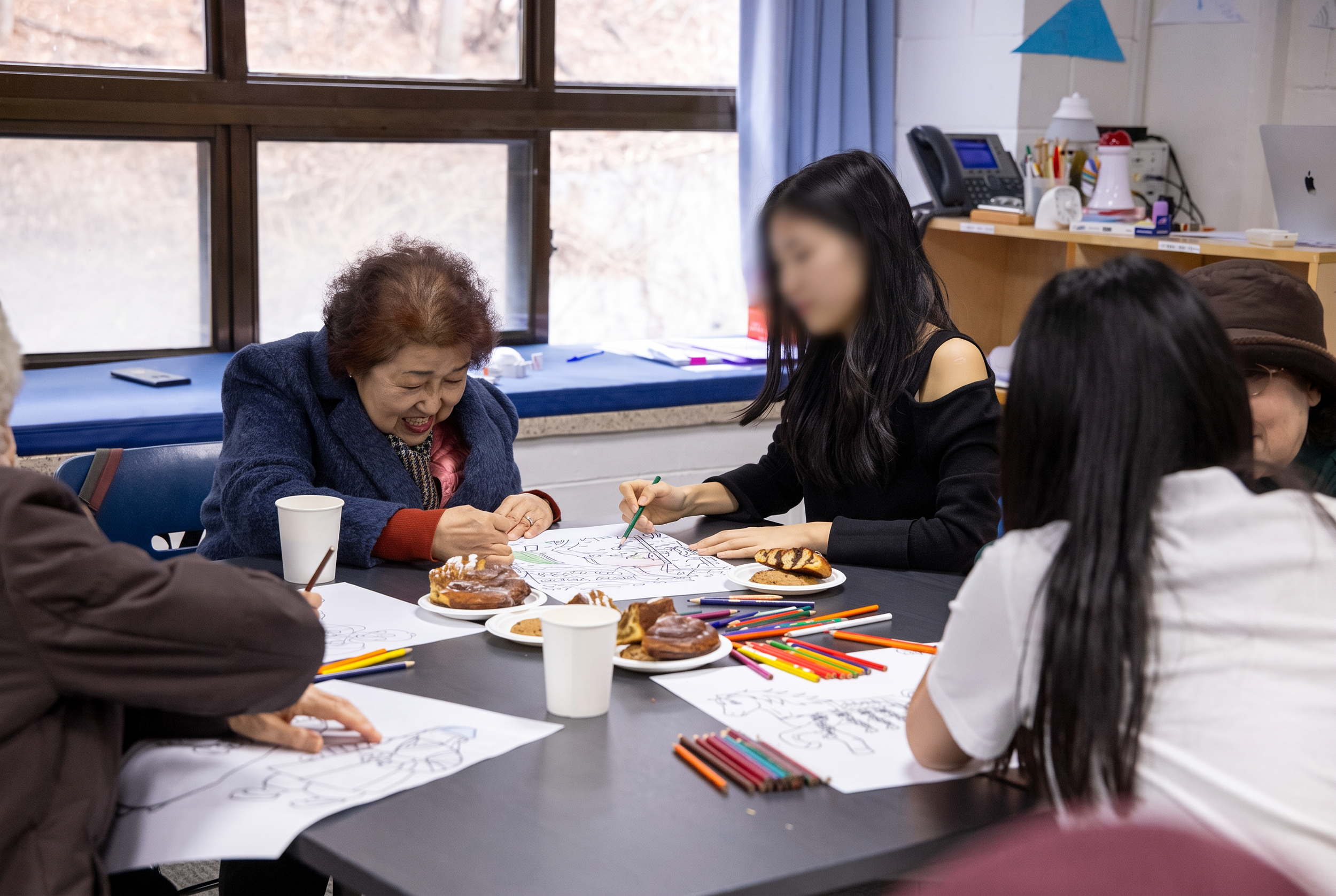
Within a cultural context that prizes family connection, students of SFS are engaged at widening this definition. Cross-generational engagement opportunities include meaningful and continuous interactions with community elders. (image supplied)
Money, handled on purpose
Fundraising is, in her words, "one of the stickiest points." For community engagement initiatives, Seoul Foreign School fundraises once a year, at a carnival-style event called Fall into Action built around advocacy, awareness and resource gathering. Proceeds go into a communal pot "because we're all one community,” she explains. Groups request what they need by form rather than just building up independent reserves ahead of genuine need. Kristin explains that money buys materials, or pays a partner organization for a trainer's time, rather than being handed over as a donation. Partners themselves are invited, with tickets provided.
Where Inspire Citizens comes in
The scaffolding underneath all of this came from Aaron Moniz. “Inspire Citizens just played such a huge role in building the structure," Kristin says. "We had slides for teachers... ‘what are the check-in points?’” The resulting sequence is patient by design: explore, investigate, engage with partners, and only then act, which lands "actually after January before they take full action.”
"Inspire Citizens did an amazing job creating that structure for us, and then we've taken those resources, those materials, and then we've just run with them,” Kristin reflects.
Aaron's second contribution as a thought partner was less tangible. "In leadership, you don't always get people saying it's okay and you're doing a good job," Kristin says. Through a difficult first year, Aaron was the steady voice: "you are doing great and let's keep working together." And a practice she has now adopted as her own: "That's a big piece that I've learned from Inspire Citizens, of the importance of celebration."
Which is how she opened year two with teachers. Last year was tough, she shared with them. "But guess what? The kids were engaged. The kids learned." With things coming together for another impactful year of community engagement, it’s hard not to feel the best is yet to come.