"Have a Go": A Music Teacher's First Steps into Systems Thinking
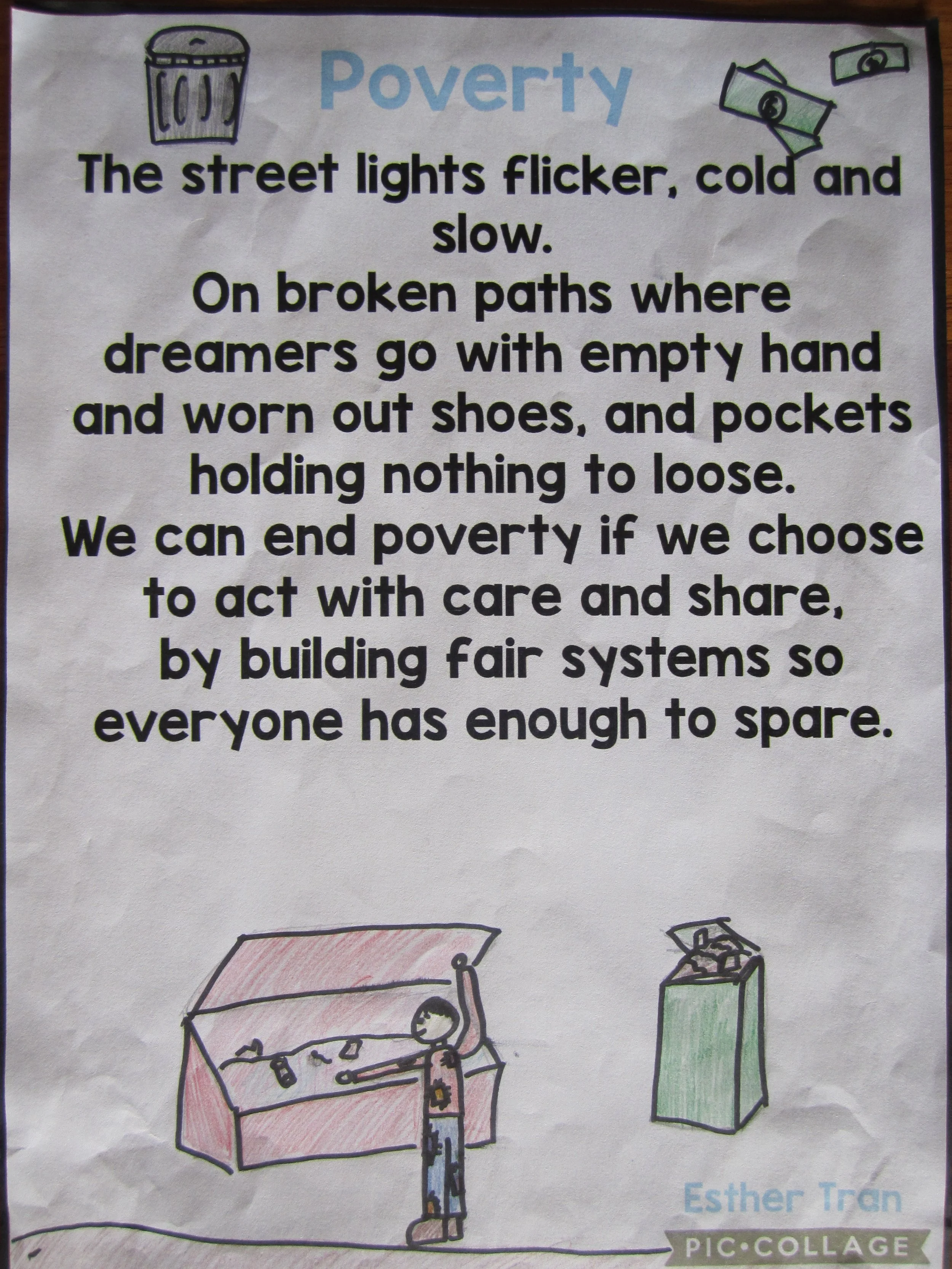
Evidence of empathy: a student’s creative submission demonstrates the impact of intentional and appropriate education that links to important societal and global issues.
Heather Francis has spent forty-eight years in classrooms, twenty-four in Cape Town and twenty-four in Australia. When the Year 5 and 6 Project Based Learning topic turned to Poverty, the veteran music teacher found herself in unfamiliar territory.
"That was a challenge at the start," Heather says. "I thought to myself, ‘How am I going to teach Music and the poverty topic?’”
Her answer was to do the work she was challenging her students to do. She researched and learned, she reflected, then she wrote a song as a mentor text.
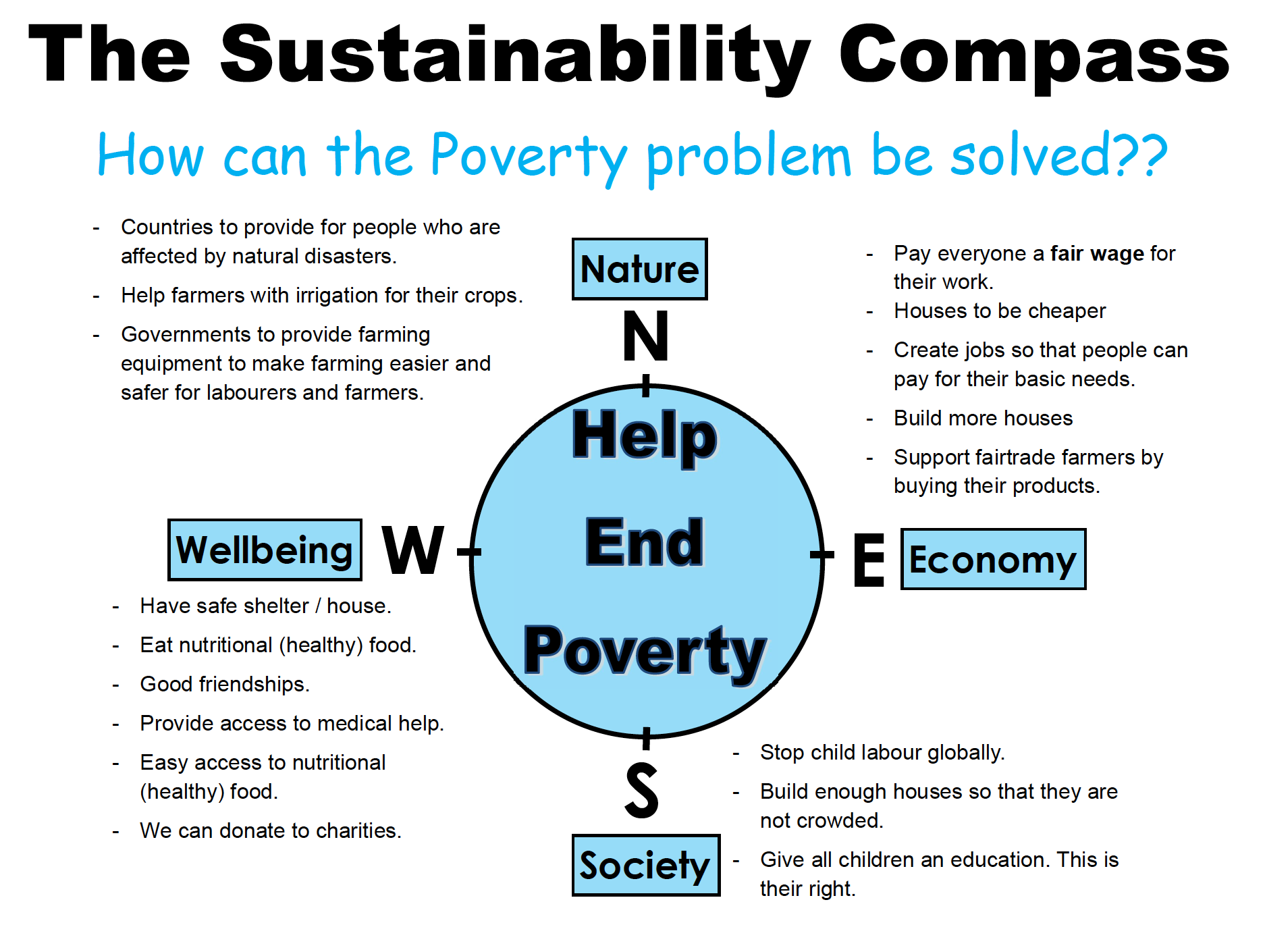
Through a professional development opportunity with Lottie Dowling of Inspire Citizens, Heather discovered the utility of the sustainability compass concept.
Small actions, real lives
Every PBL unit at Sunshine Christian School is anchored to a Good Life Goal. The framework takes the seventeen United Nations Sustainable Development Goals and translates each one into five everyday actions a person can actually take, the sort of ideals that ask you to live with purpose and bloom where you are planted. Heather's unit sat under Goal 1, Help End Poverty, which opens by asking people to learn the causes of poverty at home and abroad.
"They all have their own good life goals," Heather says of her colleagues.
A compass as a starting point
Heather needed a way in. It came through professional development led by Lottie Dowling of Inspire Citizens, who introduced the Sustainability Compass from Compass Education to the staff.
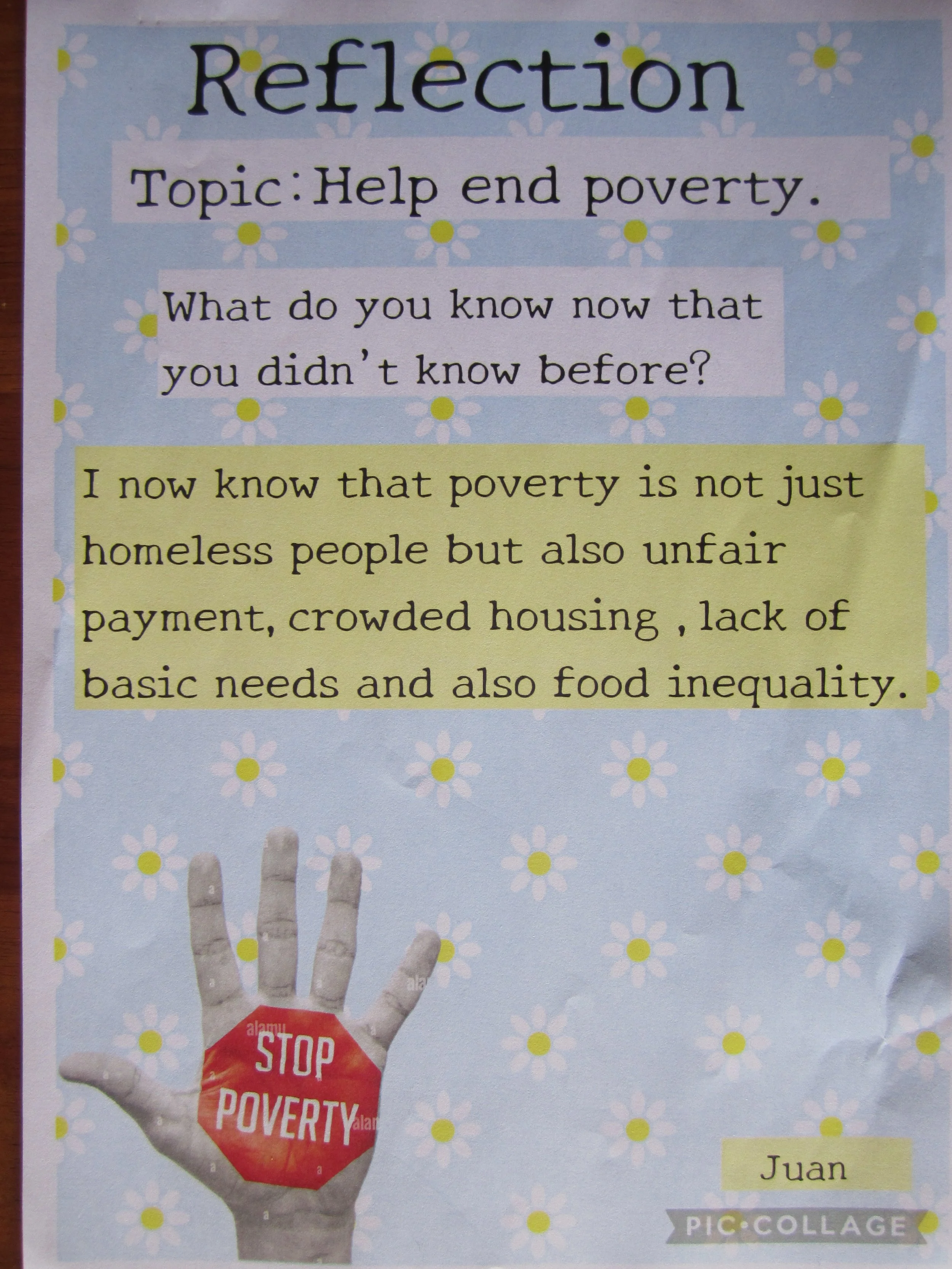
Revealed through reflection: this unit has clearly produced potent and nuanced understanding of a challenging issue.
"She explained how it all worked because I had no idea. It was totally new for me," Heather recalls. Lottie followed the workshop with coplanning and coaching as part of a one year partnership, helping teachers draw up their planning. She shared her own example, and Heather adapted it to fit Poverty.
"The sustainability compass introduced by Lottie was, for me, a great springboard,” Heather reflects.
The next step for this teacher was to develop two compasses of her own, one mapping the issues and one exploring solutions. Working through the coordinates of nature, economy, society and wellbeing opened up unexpected conversations. "The one that stood out for me, and even for the children, was economy," Heather says.
Then she kept going. After learning about Root Cause issues with the Root Cause Tree, she used the Iceberg Model which she designed and used with the class. "It helps one to understand why things happen and how we can take action to create a powerful change," she says.
Building understanding before building songs
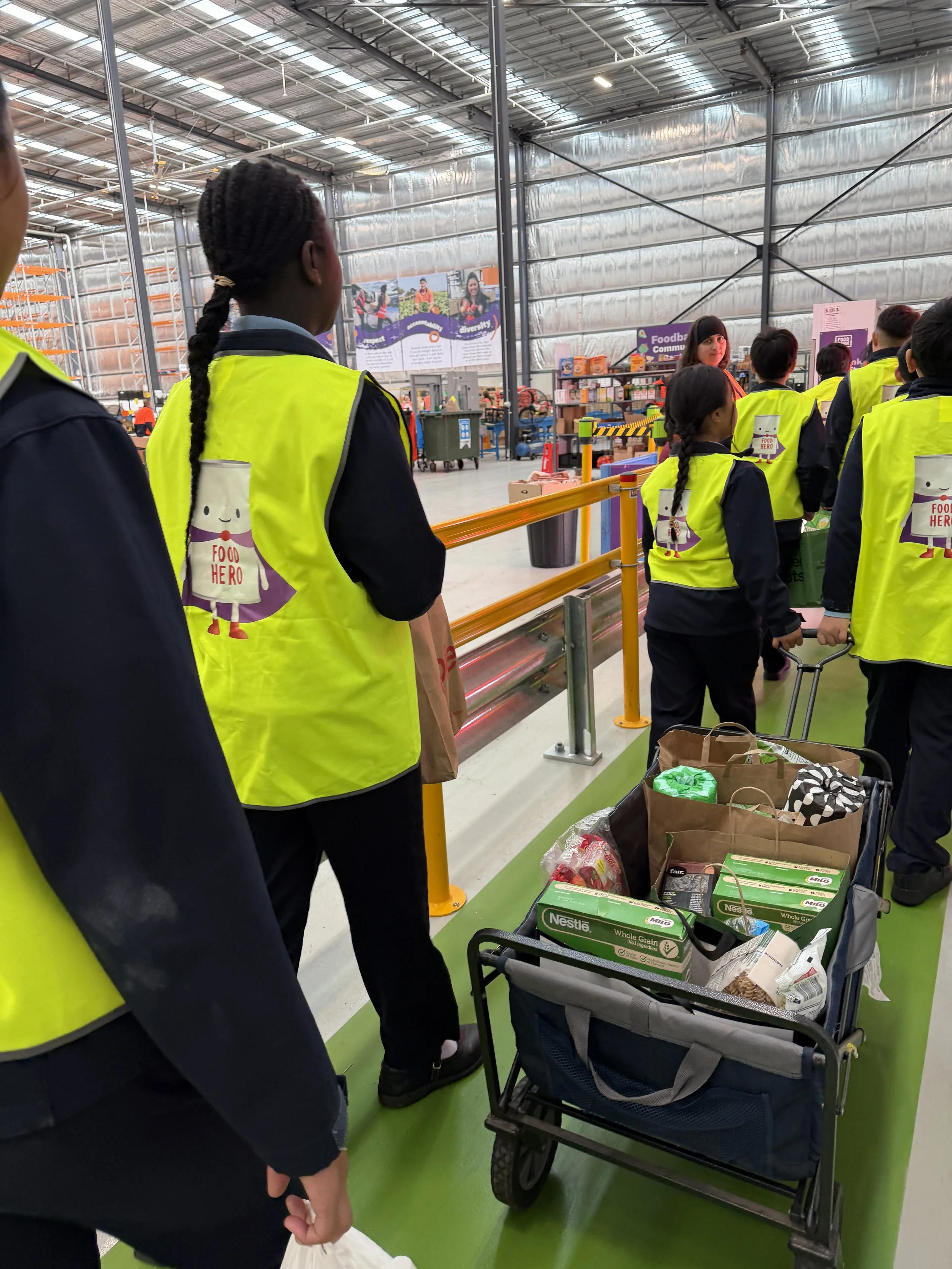
Heather’s students were the first primary school learners to visit the new premises of a recently located local food bank.
Heather laid careful groundwork. The class read Poverty and Hunger by Louise Spilsbury and On Our Street by Jillian Roberts and Jaime Casap. They built vocabulary, they worked through empathy maps and scenarios, and they learned about fair trade. Heather shared curated images from Dollar Street, and the room shifted. Dollar Street is the free, interactive tool provided by Gapminder, the famous Swedish foundation that aggregates big data to support wider understanding of disparity across the world. Heather recalls the moment clearly: “They were shocked to see the conditions in which people are living. And they soon realized that poverty is global."
They listened closely to lyrics too, from We Are the World to What a Wonderful World. "How can you enjoy the green trees and the blue skies when you live in poverty?" Heather asked them.
The unit turned out to carry as much literacy as music. "They had to have the literacy to be able to talk about it, express their thoughts, and then write about it,” says Heather.
Songs, a concert, and a food drive
Heather modelled the task first, performing her own song and showing students the succession of drafts behind it. Then, working alone or in pairs across their one hour each week, students wrote poems and set them to melodies of their own.
"I said to them, ‘everybody's song is correct. That's the way you feel,’” Heather recalls the need to encourage them. “You don't have to be embarrassed about it.”
The class held a concert. Some sang, some read their poems aloud, and the lyrics went up in the school hall and out in the school newsletter. Students then delivered non-perishable food to a local food bank charity, the first primary school to visit its new premises as part of ensuring units had a strong focus on taking real-world action.
The enthusiasm outran the plan. "They were so enthusiastic about it that we had to stop them. I had to say, ‘I think we have enough food for now, because they were just bringing loads and loads of food.’”
What Heather knows now
Heather asked her students what they knew now that they had not known before. She holds herself to the same question.
"I did not really know that the poverty problem was so severe," she reflects. Healthcare and school access surprised her the most. "It really became so real that we have to do something about it."
To any colleague hesitating over incorporating community engagement goals into a traditional unit, her advice is short and encouraging: "Have a go. I didn't know it would take me this far and that the students would be so highly enthusiastic."