Sometimes Soup Says ‘Thank You’: Community Engagement Lessons from Katy Freeman's Early Years Classroom
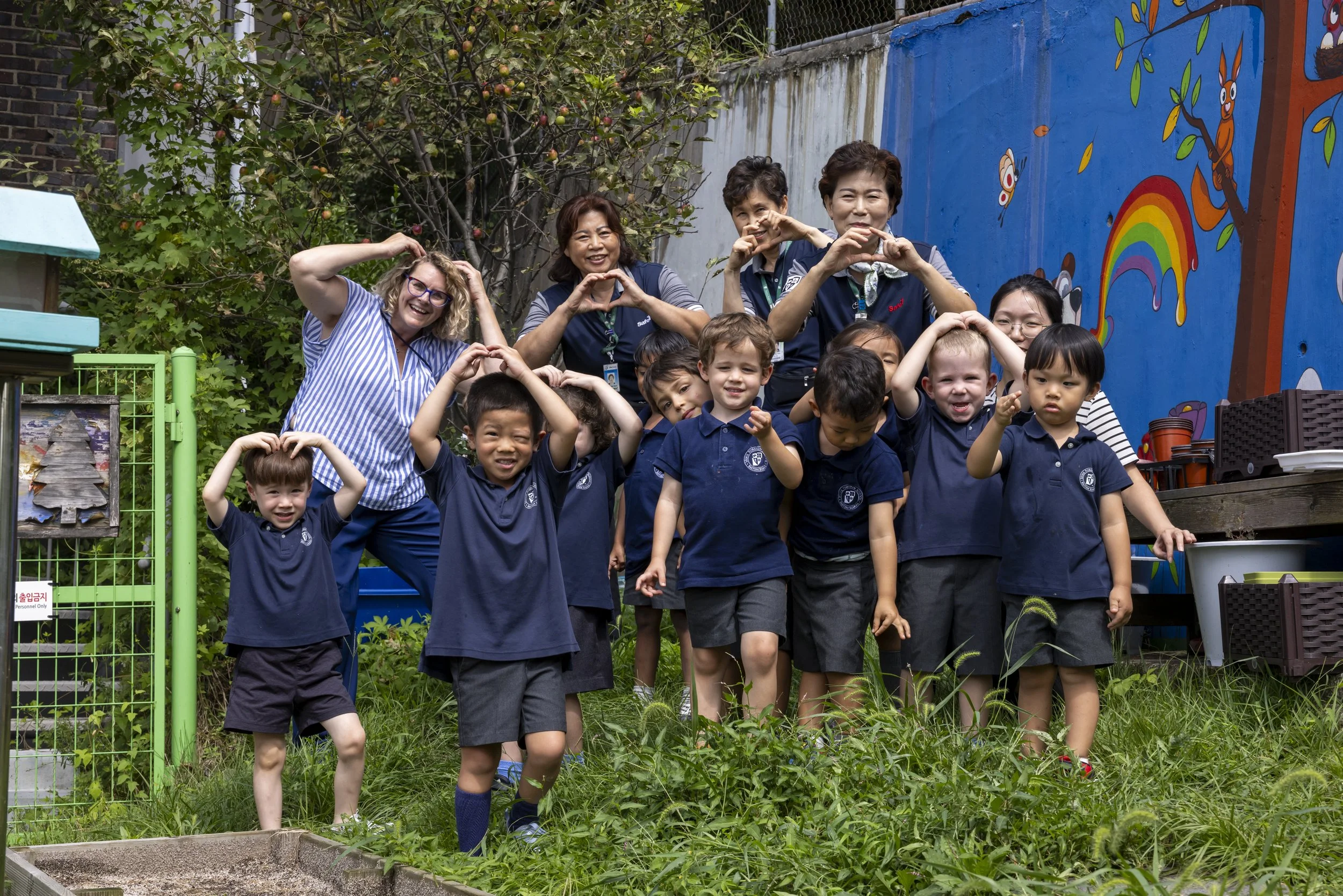
The concept of community engagement has the power to enhance connections across perceptual barriers within one’s own school ecosystem. (image supplied)
At Seoul Foreign School's British International School, Katy Freeman teaches children aged three to five. She calls her class the Foundation Class, and the name is intentional. "We are literally providing the foundations for their beginning, for their learning journey," she explains. What Katy has built over eight years goes well beyond phonics and number sense. It is a living culture of service, curiosity, and genuine human connection that reaches from the classroom garden all the way into students' homes.
People Are the Best Resource
Katy's approach to community engagement is grounded in a simple conviction: humans are the richest resource available to any teacher. "Use the humans," she says with a smile. "They are our best resource!” In practice, this means that a parent who happens to be a church organist becomes a field trip destination. A father with an office in the Lotte Tower becomes part of an exit point for a unit in the world around us. And the school's community of ajumeoni (아주머니) — the Korean cleaning and groundskeeping staff who tend the campus, affectionately called “auntie” — become expert collaborators in a garden project that has quietly transformed the relational fabric of the school.
The garden story began with observation. Katy noticed the ajumeonis were skilled gardeners, cultivating small patches of land wherever they could find them around campus. Rather than directing the project herself, she invited them in as the experts. "I wanted to make sure that the gardening project wasn't me telling them what to do," she explains. "I wanted to make sure it was something for them as well as for us." With support from the school — Inspire Citizens Founder Aaron Moniz had helped establish the raised garden boxes through his work with Seoul Foreign School's broader community engagement programme — Katy handed the ajumeonis genuine agency. She told them: do whatever you want, grow whatever you like and aim to involve our young learners.
How Do You Say Thank You?
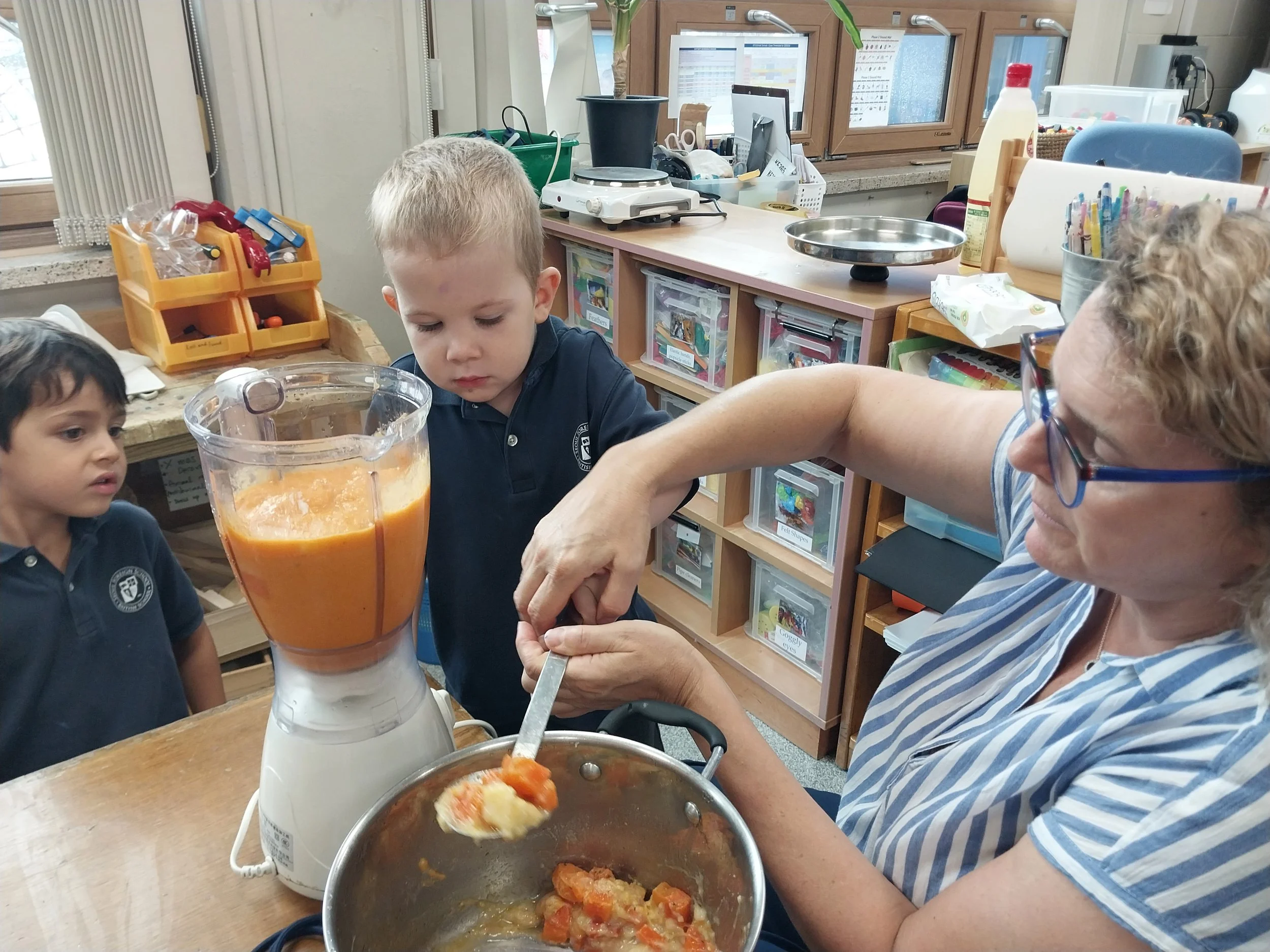
Acts of service shape patterns of thought among young learners at SFS. Educator Katy Freeman recognized an opportunity to facilitate a connection between the ajumeoni on campus and her students through an exchange of ideas and sentiment. (image supplied)
The students were there when the soil was worked, when the seeds and sprouts were planted and as the weeds were pulled. And when they returned from summer break, they found beans, carrots, watermelons, and even peanuts. All of these and more were tended by the ajumeonis through the holiday months. The harvest raised a natural question: how do you say thank you to someone who has given so much?
For Katy, the answer was soup. Students harvested the carrots, cooked them together, and invited the ajumeonis to sit down and share the meal. “To directly say thank you in the spirit of the culture, they get very shy," Katy explains. "So we pivoted to an invitation: just come and share the soup with us." Around that table, something shifted. Staff who had largely remained in the background of school life became known by name, known by story, known as people with land outside Seoul and a genuine love for growing things. "They weren't just ajumeonis," Katy says. "These were ladies who were very sweet and very lovely and who were now viewed as members of our community."
It is a model of gratitude worth borrowing: not a performance, not a certificate, but a shared meal that honoured relationship over formality.
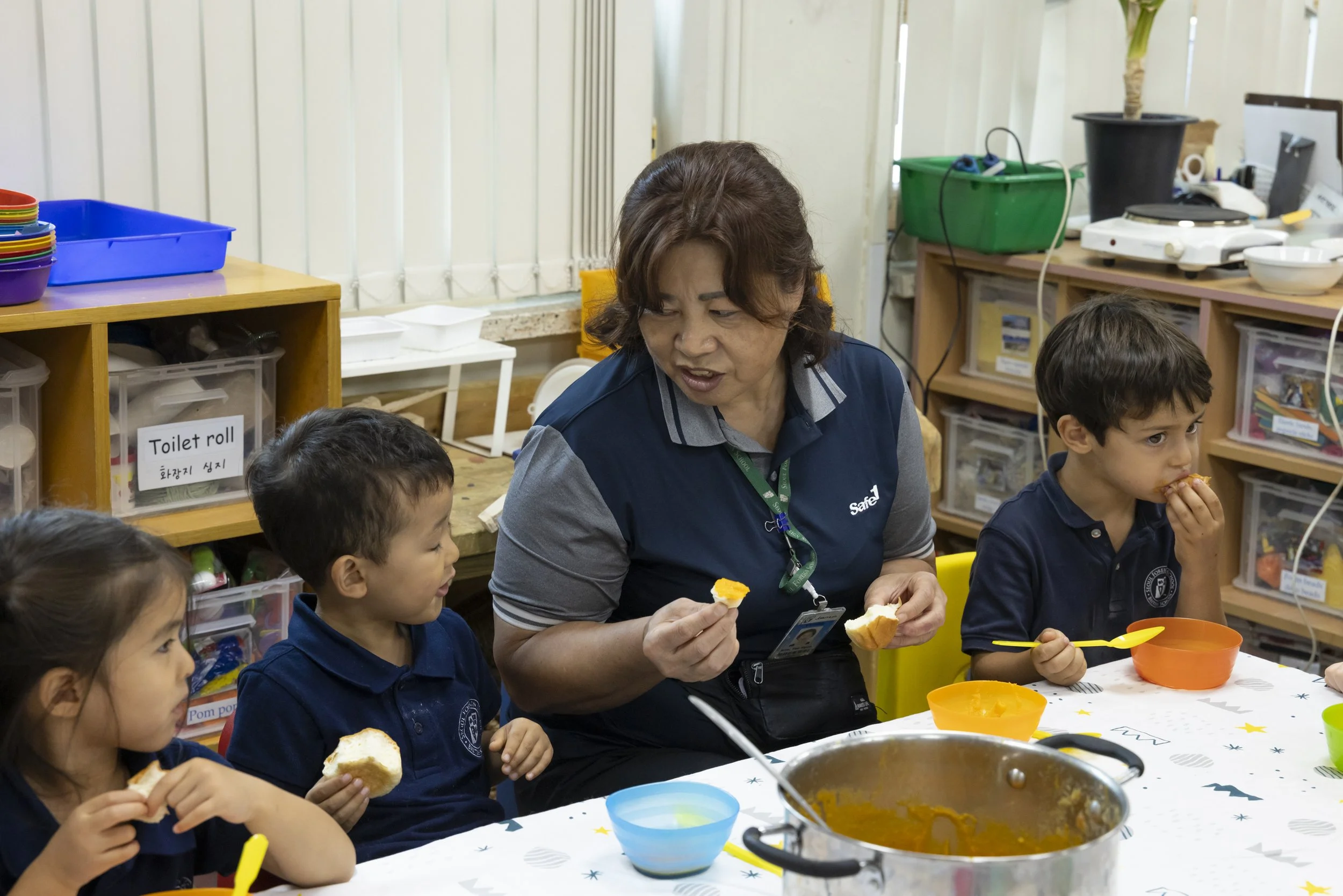
A shared bowl of soup takes on much more meaning within the context of an intentionally crafted engagement opportunity for members of the SFS learning community. (image supplied)
Bringing Parents Into the Story
That relational culture doesn't stop at the school gate. Katy is deliberate about pulling parents into the journey by making them genuine participants. When a polar bear adoption project emerged organically from a weather unit, students decided they wanted to raise money through doing extra chores at home. Katy was careful in how she introduced this to families. "I tell them the story," she says. She communicates through Seesaw, the school's parent-facing app, using the language of core values — respect, responsibility — and framing projects within their curriculum context. The result is parents who understand not just what is happening, but why.
She is also candid about the complexity of the framing. When the garden project was taking shape, she had her TA check in with the ajumeonis first. Were they comfortable? Would participation create problems within the school's existing staff hierarchy? "I wanted to make sure that it was transparent," Katy says, "because one of them said, ‘I might get in trouble.’” So Katy checked in, listened before assuming and gave people a genuine choice. That kind of cultural attentiveness, reflects Katy, is part of what makes the work sustainable rather than performative.
Start Simple. Start Early.
Katy's final word of advice for educators is both humble and urgent. "A service project doesn't have to be huge," she says. "It might be writing a thank you letter."
What matters is how we, as adults, model the daily, visible practice of thinking of others, noticing who is around us, and asking what we might offer and what we can do to help or make things better. "As teachers, if you're able to model and open up opportunities for service right from a young age, it's so powerful." It is in the early years, she argues, that modeling lands in especially fertile ground. Children at three, four, and five years old offer help because they want to. The instinct is still intact. "Children do have a natural tendency toward kindness and empathy," Katy says. "When you're encouraged in that environment, there's no inhibition to help anybody."
Soon, this year’s garden will be planted. The soup will, in some form, be made. And somewhere in that cycle, a group of very small humans will learn something large about what it means to belong to a community.