More Than Passengers: How Embedding Service Learning in the Curriculum Promotes a Changemaker Mindset
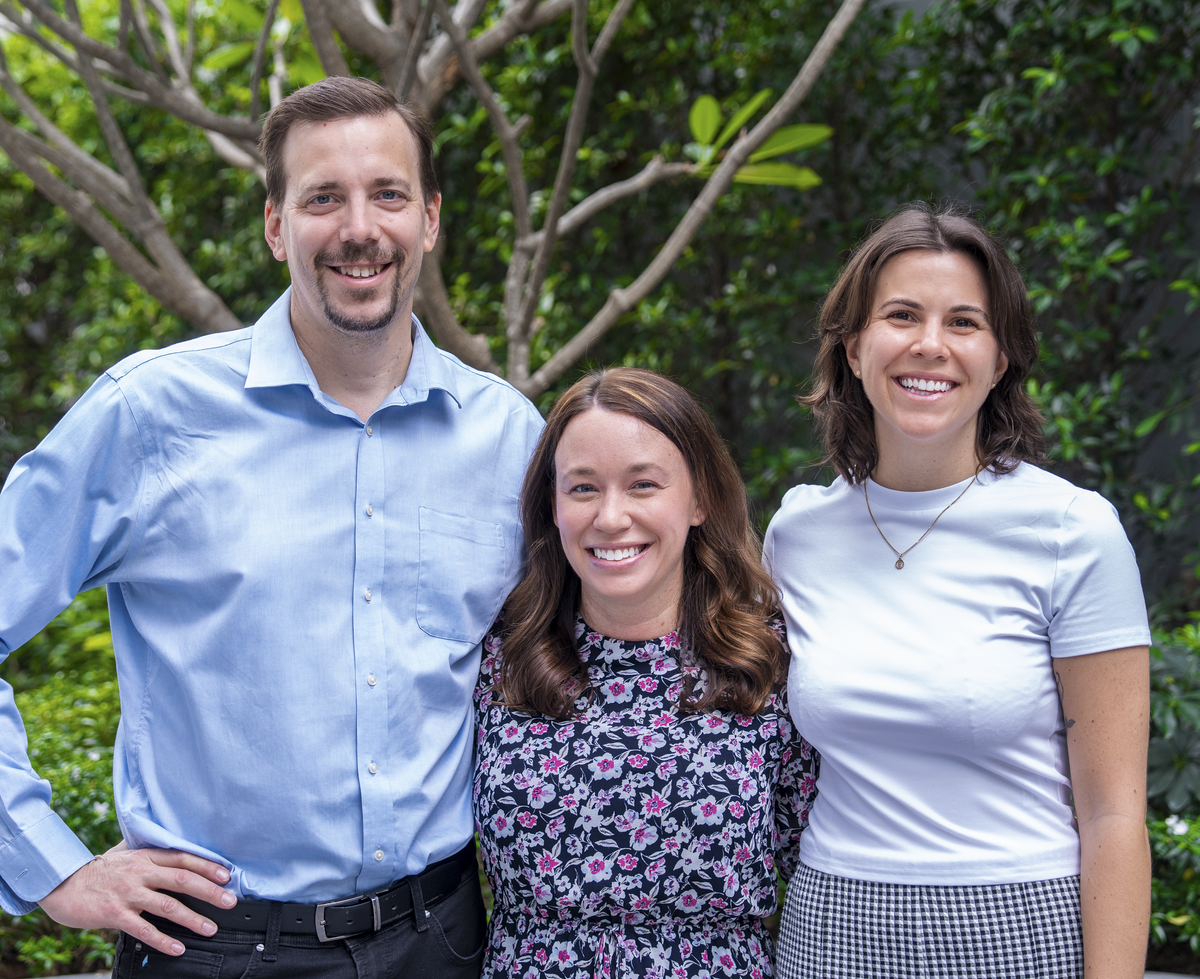
Educators MacGregor Grier, Lindsay Rutherford and Elizabeth Brykalski represent the wider work that is happening at NIST international school to implement robust service learning approaches in the classroom.
Nestled amongst the busy streets of Bangkok, Thailand, NIST International School has been building momentum in elementary service learning, but strategy only goes so far. At some point, the work has to land in classrooms, with teachers, with children. A sampling of three educators across the elementary spectrum at NIST illustrates what it looks like to bring that vision to life.
Elizabeth Brykalski teaches Year 1 and serves on the service-learning committee. Lindsey Rutherford is a Year 5 homeroom teacher, also on the committee. MacGregor Grier spent several years at NIST in secondary before moving to elementary, giving him a unique perspective on how service learning develops across divisions. Together, their stories reveal what embedded service learning actually looks like when it moves from planning documents into daily practice.
From Standalone to Woven In
The shift is fundamental, MacGregor explains. “We’re moving away from a standalone day where we do service. It's really part of what we do as part of our curriculum.” He points to a broadened approach, “where the kids do research about the issues, including sustainability, before they even go out into the field [then] they come back, they do reflections, and they're building these relationships.”
Lindsey frames it as a question of authenticity. "We're looking for opportunities for the experiences the students have to be more authentic and genuine rather than just having a one-off experience," she says. "We're trying to make sure that it's embedded in a meaningful way where the students actually see it as part of the curriculum."
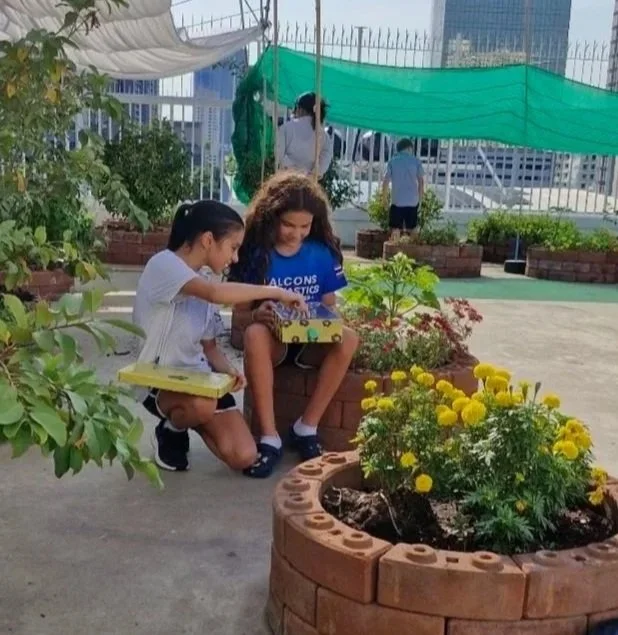
Rooftop gardens and other existing projects within a school’s operational scope represent idealogical stepping stones as they move forward to embedding service more deeply.
For Elizabeth, the transformation was personal. When she joined her Year 1 team, the service project involved tending a rooftop garden that secondary students had established. "It was a really great service group to be a part of, but it lacked intentionality in terms of why are we doing this in Year 1? Where does this fit into our ethos and our pedagogy?"
After reflecting with Hannah Chhan, the elementary service-learning coordinator, Elizabeth's team reimagined their approach around what five- and six-year-olds do best: play. They partnered with Makkasan nursery school to create a "Day of Play" that builds community connections while honoring early childhood development.
The Toothbrush Question
Authentic service learning invites hard questions. Elizabeth's team prepared gift bags for the nursery school children containing a toy, a book, a toothbrush, and toothpaste. The decision sparked what she calls "a point of contention" among teachers grappling with the line between generosity and saviorism.
Then a student raised the same question. "He looked at me and asked, ‘why are we giving them a toothbrush and toothpaste? Shouldn't their parents give them a toothbrush and toothpaste?’” Elizabeth had an honest conversation with him about different family circumstances. The class visited the nursery, everyone played together, and later that student returned with his own reflection: "I understand what you're saying, Ms Elizabeth. And also, I think it would be really great if maybe after we have the Day of Play, we can raise some money for the school so that they can have Legos and magnet tiles."
Elizabeth's team is already planning adjustments. Next year, they hope to find a neutral meeting place rather than always visiting the partner school, balancing the experience to feel more genuinely reciprocal.
From Consumers to Contributors: The Inspire Citizens Connection
In Year 5, Lindsey's team faced a different challenge. Their sustainability unit culminated in a secondhand market where students traded items they no longer needed. The event was energetic and popular, but reflection revealed a problem: students were becoming more enthusiastic consumers, not necessarily more thoughtful citizens. "If our students had been interviewed at the end of the unit, they might not have been able to identify the service and the connections that were happening," Lindsey admits.
It was amidst this vital dialogue that Scott Jamieson from Inspire Citizens arrived. Working with the Year 5 team over several days, Scott helped them explore beyond the end-of-unit activity toward something more deeply embedded. "He really gave us a whole new look on this," Lindsey says. The secondhand market is gone. In its place, each of the six Year 5 homerooms will now partner with a different community organization throughout the unit, ranging from Bangkok Community Help Foundation to the Home of Grace Secondhand Market to local recycling initiatives.
"We would not have been able to do that without having Scott there," Lindsey reflects. "He got us to think bigger."
The Why Behind the Work
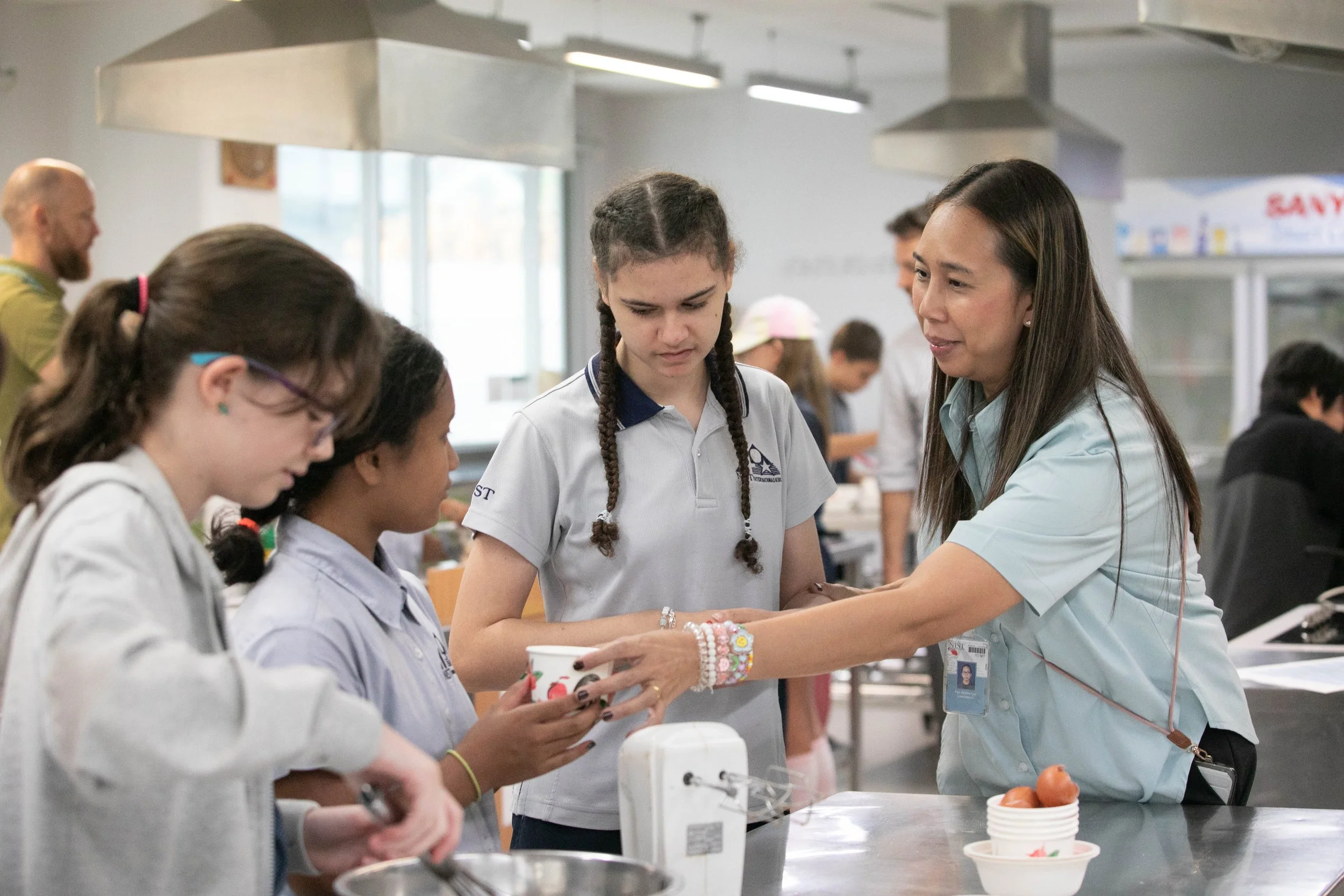
Service learning embedded in the curriculum is a natural next step for schools like NIST which have a strong heritage of co-curricular service.
The teachers speak with conviction about purpose. MacGregor notes that students in Bangkok "pass by a myriad issues on their way to school and they just don't even see them or register them. Part of our work is just to help them develop this kind of cognitive awareness." Elizabeth sees it through an early childhood lens: "Teaching children how to care, be kind, be empathetic, build community. I think that's super valuable, especially for children who are expats in Bangkok, getting to know the community."
Not every student connects immediately. MacGregor acknowledges that some remain "passengers along for the ride," and that teacher passion doesn't automatically transfer. "Sometimes I need to take a step back myself and let the kids just have the experience," he says.
But when it works, the impact is unmistakable. MacGregor describes annual visits to the nursery school tucked behind an automotive repair shop, where NIST students navigate through exhaust manifolds and other car parts to find a community of children who are beginning to recognize them year after year. "I think it's really a highlight of the season, perhaps the semester, for a lot of these kids."
A Community That Lives Its Values
From an internal assets perspective, teachers credit Hannah Chhan and community partnership liaison Yui Khetnimit as essential bridges. "Yui's role is amazing," Elizabeth says. "She has so many connections within our community." MacGregor recalls Yui discovering the nursery school on a walk during COVID, then organizing trips to rural Isan to build a maker space at an under-resourced school. "Deep inside her soul, this is what she's thinking of and doing just naturally all the time."
Recognizing the school's network-based assets, the investment in Inspire Citizens signals institutional commitment. "Knowing that what we're doing is being backed by NIST and is something that the school thinks is important, Elizabeth says, made the work feel valued and sustainable”. When Scott Jamieson visited, his presence coincided with community-wide flood relief efforts organized by the Parent Teacher Association, reinforcing that service is woven into NIST's collective mindset, not confined to classrooms.
"It is really part of our character as a community," MacGregor reflects. "It's more than just a checklist or a unit."