Lightning in a Bottle: How Three Educators Turned Community into Curriculum
At Lincoln School in Buenos Aires, a dinner conversation sparked a cross-grade collaboration that transformed how young learners see the people around them.
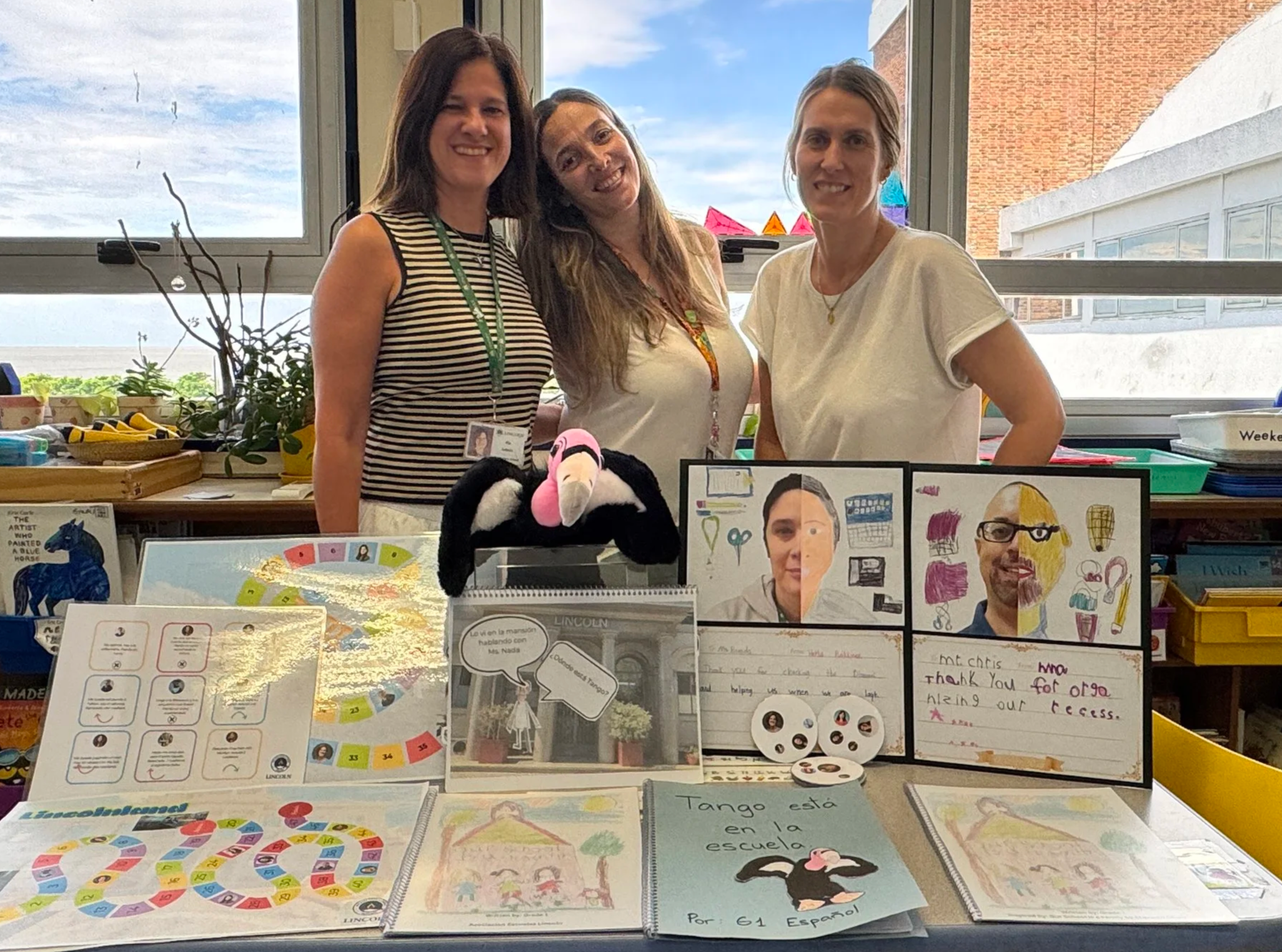
Pia, Lorena and Gimena are friends and collaborators who share a vision of connection for elementary school students and the broader community in which the students learn.
It started over dinner. Three educators from Lincoln School in Buenos Aires found themselves talking shop outside of school hours, and the conversation drifted toward a shared observation: their students were learning about "community" as a curricular concept, but were they truly seeing the people who made their school function every day?
"We teach about community, but then children don't know their names," reflects Gimena Iturrieta, a K3/K4 teacher. "We said this needs to be bigger than just, ‘oh yes, community.’ These important people help us. But who are they? What do they do? What do they like? What are their names?"
These questions became the foundation for a collaboration between Gimena and first grade homeroom teacher Lorena Gonzalez, and Spanish teacher Pia Lebuis. What emerged was a multi-layered learning experience connecting Lincoln's youngest learners with the maintenance staff, cafeteria workers, nurses, guards, and administrators who support them daily.
Constructing Bridges Through Bilingual Games
The team created a bilingual approach that honoured both their Argentine context and their school's dual-language program. Spanish-speaking staff members like cleaners, cafeteria workers, and maintenance personnel were interviewed in Spanish during Pia's classes, while English-speaking administrators visited Lorena's classroom. The children developed interview questions, conducted conversations, and learned names and roles of people they had previously passed without recognition.
From these interviews, the educators designed games that would reinforce the learning through play. A Lincoln-themed version of Chutes and Ladders features staff members' faces on game spaces, with cards describing each person's role. When a child lands on the school nurse, they might read, "I got hurt. I go to the nurse. I lose a turn." Even the school's service dog, Gracie, makes an appearance.
Even more competitive is their adaptation of Spot It, the fast-paced matching game. "You need to look really quick," Gimena explains. "You flip a card and you need to see if you can find a match and shout out that name. So you need to know the names of all the people."
The games work only if children have genuinely learned who these community members are. As Lorena notes, "You really need to know their name as a starting point.”
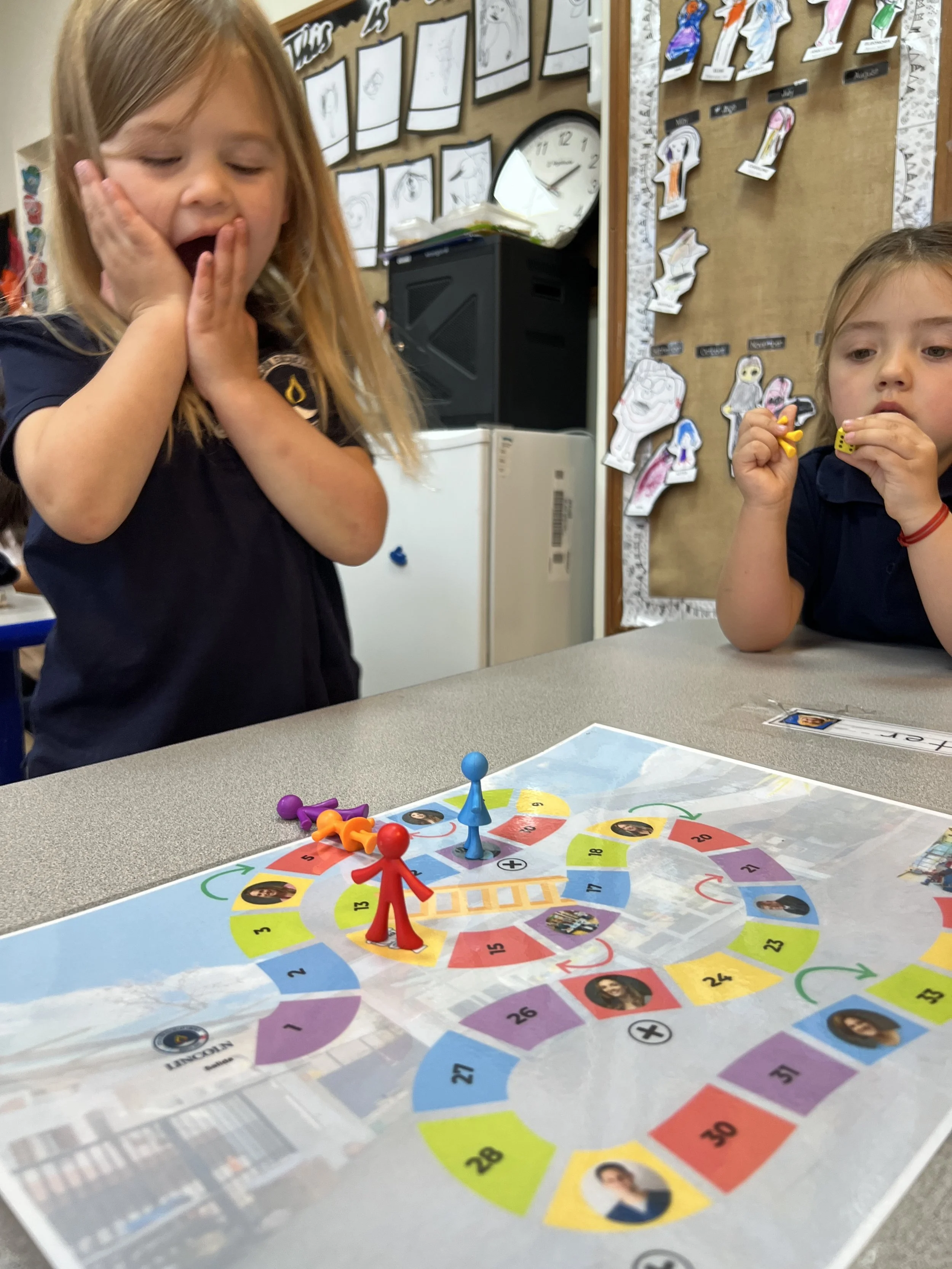
Young Lincoln learners continue to deepen their connections to the people who support the school through the development of an interactive game that promotes community engagement.
Using the Synergy of Art, Gratitude, and Celebration
The collaboration extended into art class, where first graders studying symmetry created portraits of staff members. But these were not ordinary portraits. Each included a personal thank-you message expressing gratitude for what that person contributes to the school community.
"Students learned about what was their role, what do they do at school," Lorena explains. "So they said thank you for doing this."
A culminating celebration brought together all the staff members who had been interviewed and portrayed. Parents contributed treats, children presented their portraits, played the games with their honourees, and shared books they had created. One book, inspired by Shannon Olson, tells the story of "Our School as a Family" and now serves as an onboarding resource for newcomers to Lincoln.
The school mascot Tango, a miniature condor, stars in another student-created book written in Spanish. Children photographed different areas of the school and crafted a story asking "Where is Tango?" as a playful way to learn the campus geography and learning the roles of people who might work in that space.
The Impact of Being Seen
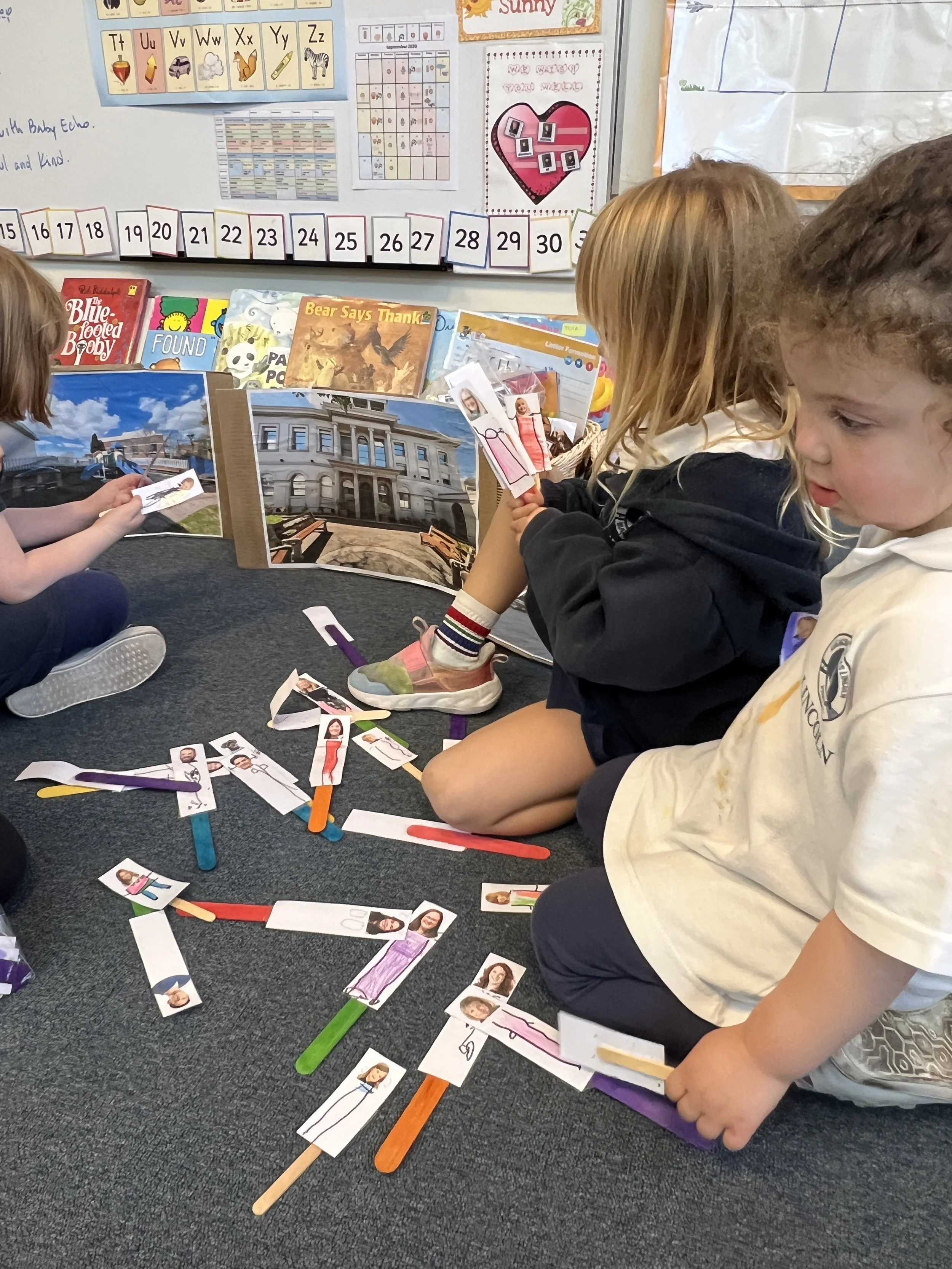
From the seeds of the teaching team’s ideas grew many varied expressions of community engagement within their own school walls.
The most meaningful outcome may be the simplest one. Maria, the cleaning staff member who visits Gimena's classroom daily, shared that children knowing and using her name was the most important thing about her job.
"Now she walks around school and children greet her by name," Gimena says. "That very simple little thing, like learning people's names, has had a big impact both in the little ones and in Maria."
Building on a Foundation of Trust
When asked what advice they would offer other educators hoping to replicate this kind of collaboration, the team returns to one word: trust.
"Time helps you build trust," Gimena reflects. "And once you have the trust, it's easier to collaborate."
The three educators have worked together at Lincoln for years, and that foundation enabled them to take risks, iterate on ideas that did not work, and divide tasks according to each person's strengths without ego. "It didn't matter whose idea it had been," Gimena says.
Pia emphasises the willingness to collaborate and possibly fail together: "We feel confident about being open to each other, making mistakes, because we made so many. We have to try and try and try again."
Their collaboration traces a portion of their origin story to an Inspire Citizens workshop, led by IC co-founder Aaron Moniz, that posited an idea about looking beyond the traditional boundaries of community engagement. That spark, combined with years of relationship-building and a shared commitment to meaningful, playful learning, produced something the educators themselves agree is as special as, "lightning in a bottle."
They plan to build on this foundation in future years, adding new elements while preserving what worked. As Lorena puts it, "The first try is not going to be the greatest. And then the second time around, it gets better."
And while the team is already thinking about future tweaks and improvements to their community integration plan, the games sit ready to be played, the portraits hang with their recipients, and children across the early grades at Lincoln School greet the adults around them with awareness and respect – and by name.
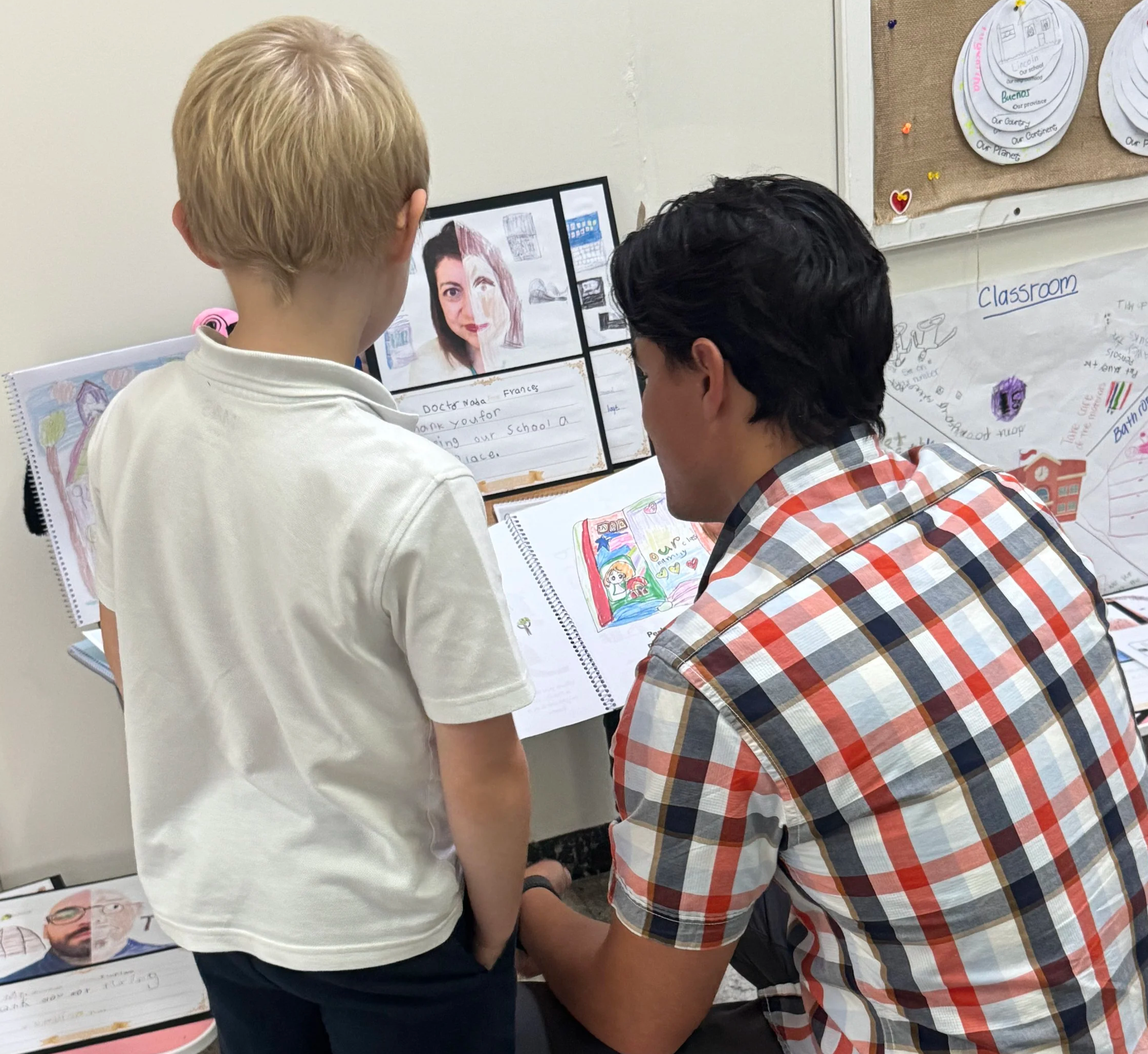
A melding of inquiry, language, art and gratitude leads students and community members to a place of connection at Lincoln School in Buenos Aires.