Open for Business: How Market Day Became the Highlight of Third Grade
At Lincoln School in Buenos Aires, Argentina, a third-grade team has transformed a standalone social studies unit into a uniquely memorable learning experience that has the potential for lifelong impact. With sustainability, ethics, and entrepreneurship woven together (and a little inspiration from Inspire Citizens) Market Day has become far more than a classroom simulation.
From Standalone to Integrated
For years, Market Day was a contained social studies unit focused on the basics of economics and entrepreneurship. Shannon Wilker, one of the third-grade homeroom teachers, explains how that changed: "This unit originally was not an integrated unit. Between our curriculum coach and [Inspire Citizens facilitator] Aaron Moniz, we came up with ideas to make it integrated across reading and writing, and to add more of a service learning aspect."
The reimagined unit now spans multiple subject areas including math, literacy, science, and social studies. All of these are now threaded together through the anchoring concepts of sustainability and ethics. Students read both fiction and nonfiction texts connected to entrepreneurship, wrote opinion pieces to their families about environmental practices tied to the Sustainable Development Goals, and explored real-world economics through hands-on simulations. Shannon reflects on what that cohesion meant for students: "They could read, write, discuss, play, create in all the areas of this topic. We could take this unit that was standalone, but then make it very powerful across all domains."
Earning to Invest: The Condor Economy
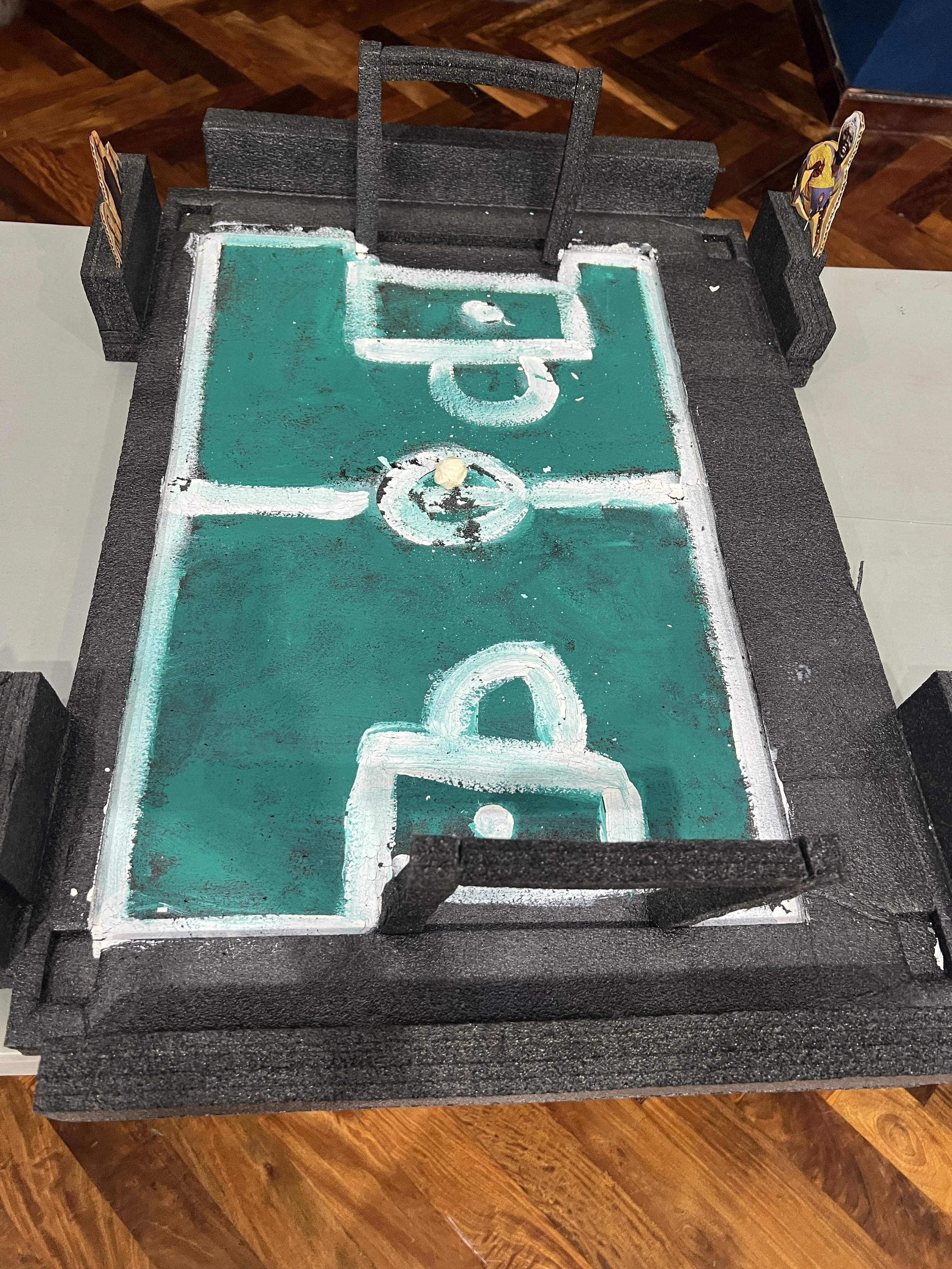
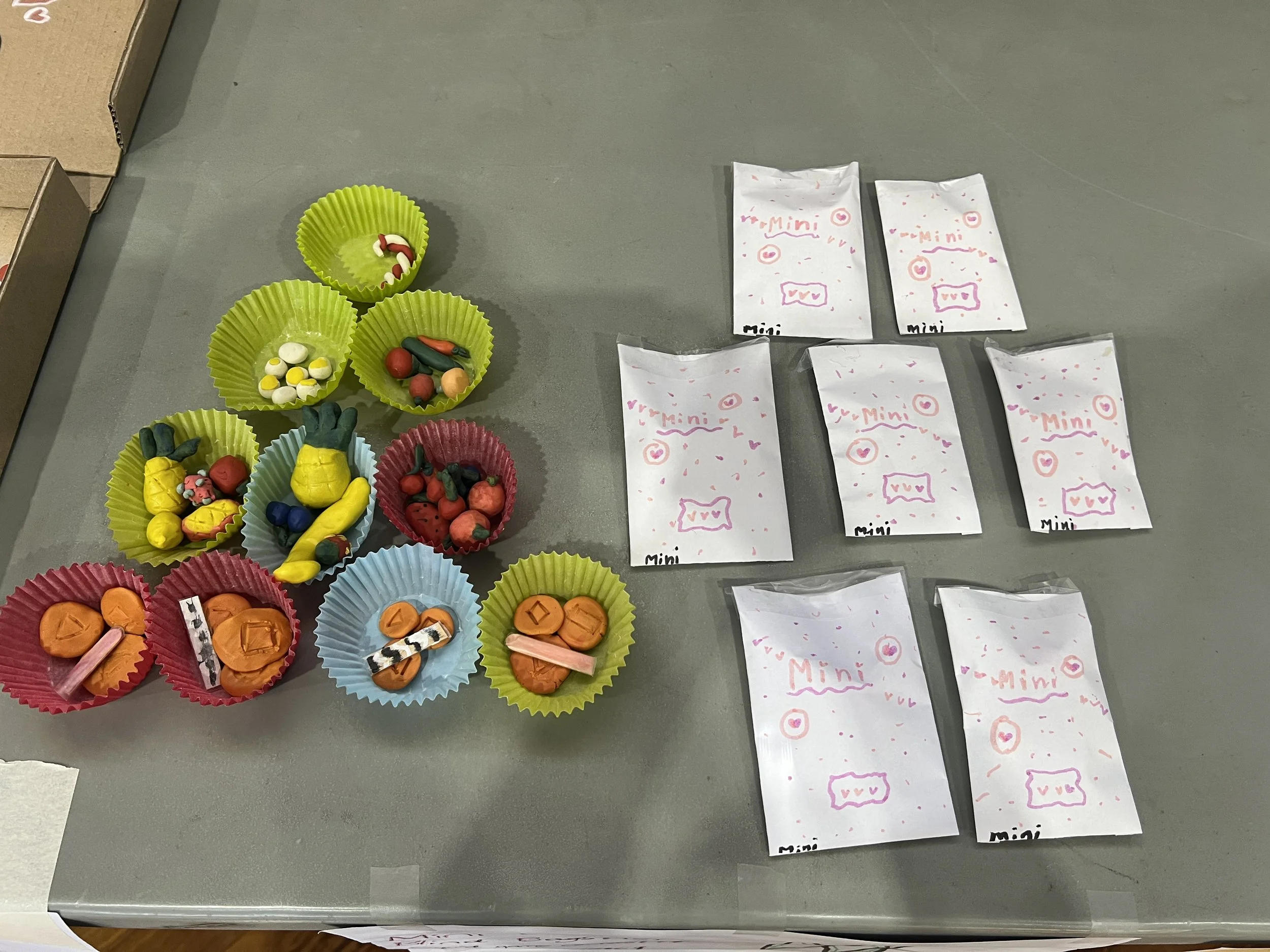
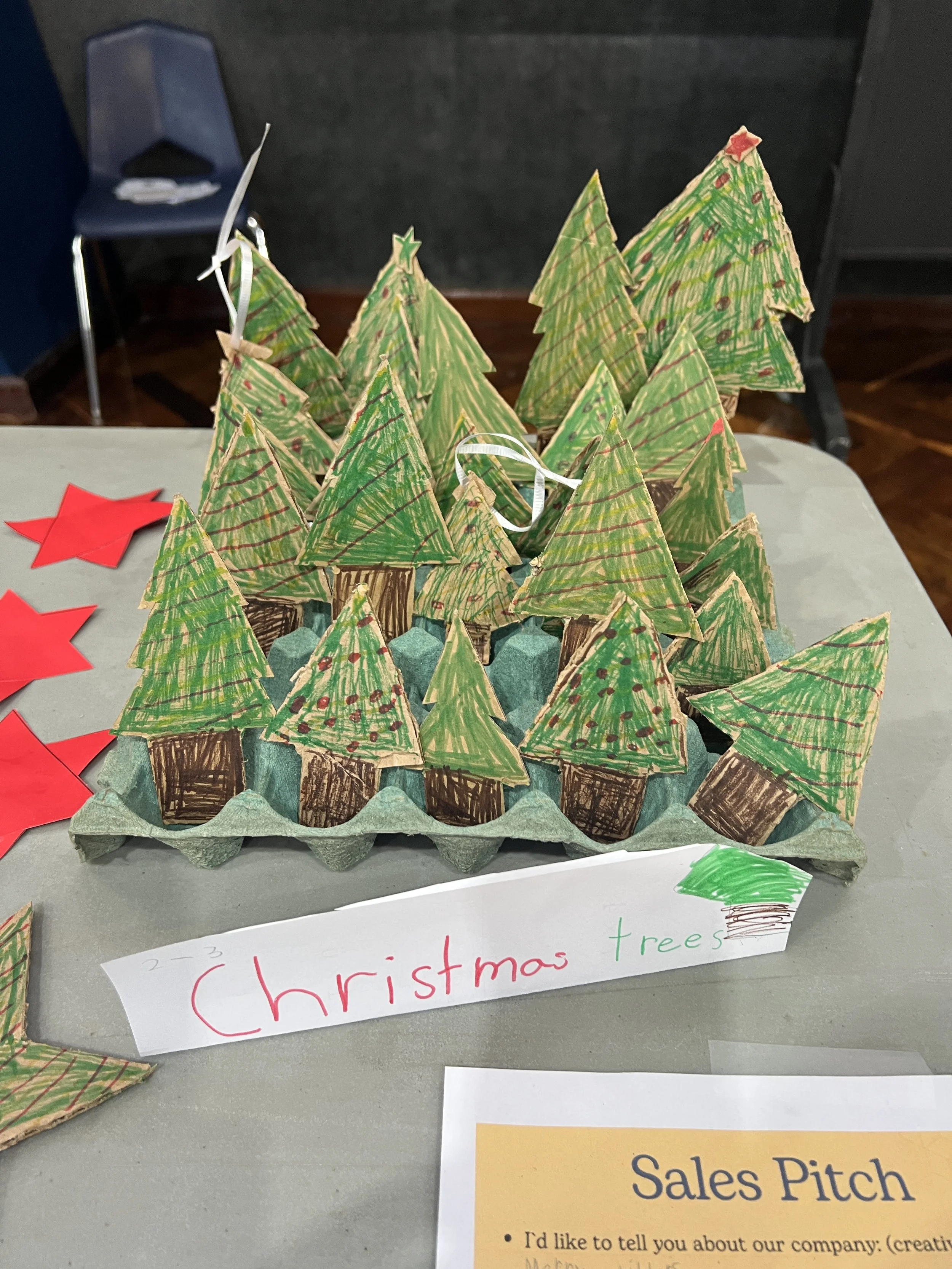
One of the unit's most engaging innovations is its internal economy. Students earn "condor dollars,” named after the school's mascot, by completing chores at home over one to two weeks. That currency becomes the capital they invest to purchase or rent materials from the school's makerspace to create their Market Day products. Everything they build emphasizes recycled or reused materials, keeping sustainability central to the process.
Silvina Tomsin, the other homeroom teacher, has taught this unit for many years and credits the chore-based earning model as a meaningful improvement: "At the beginning, we would just give them a certain amount of money to invest, but they did nothing to get it,” she reflects. “I'm glad we implemented [the chore chart] later on." The change gave students a genuine sense of accountability; they had worked for their capital, and that made every purchase matter.
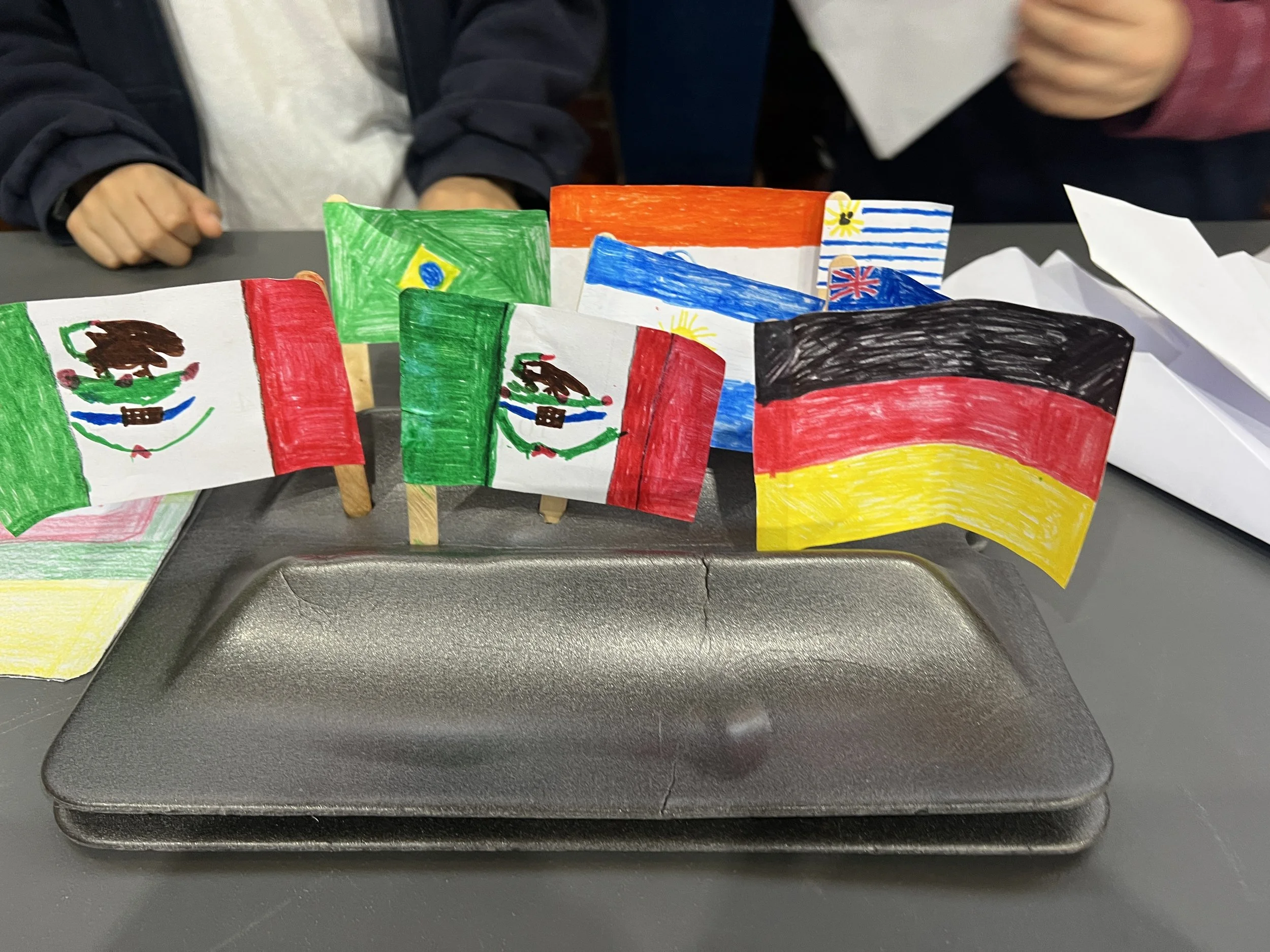
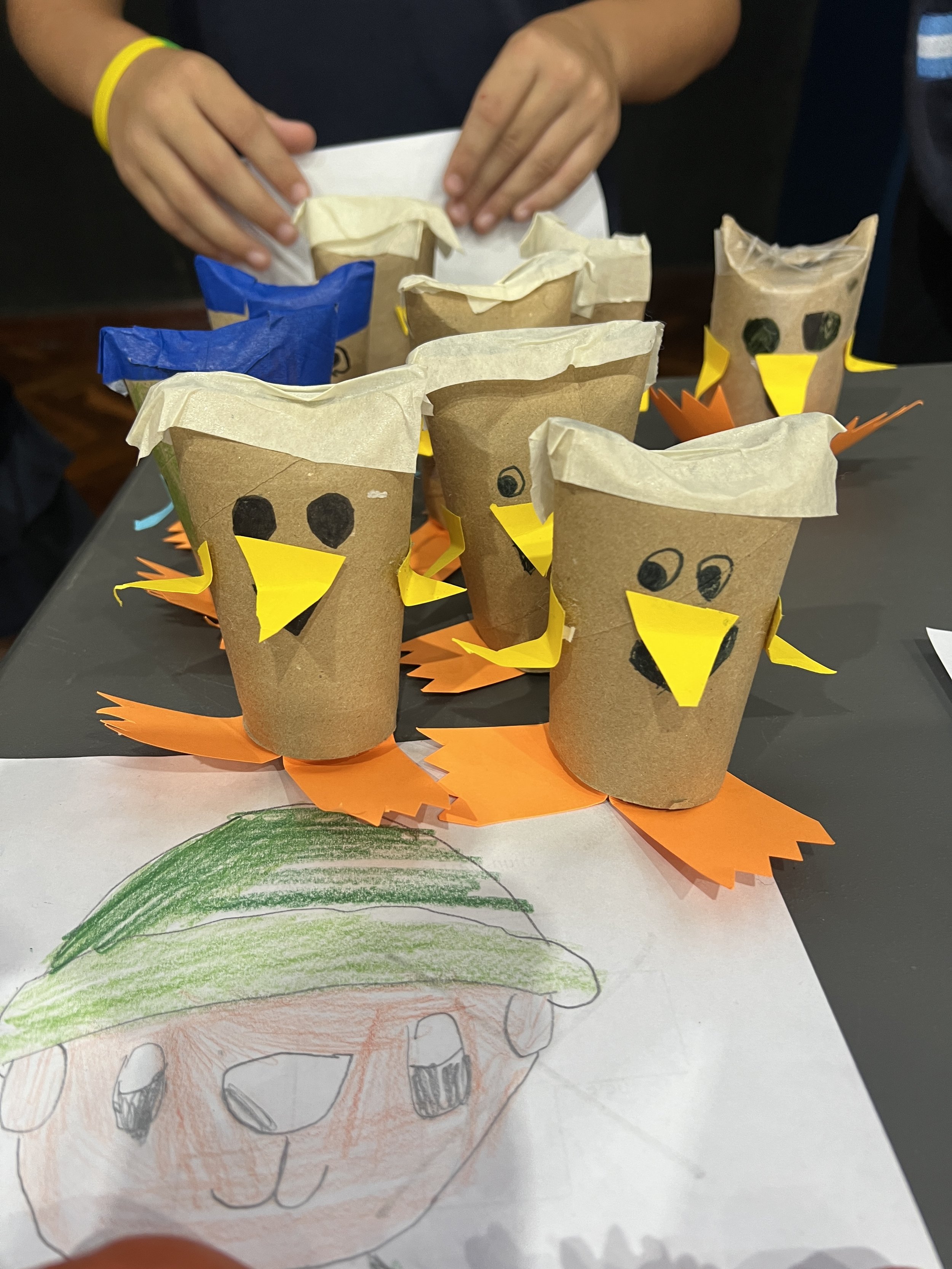
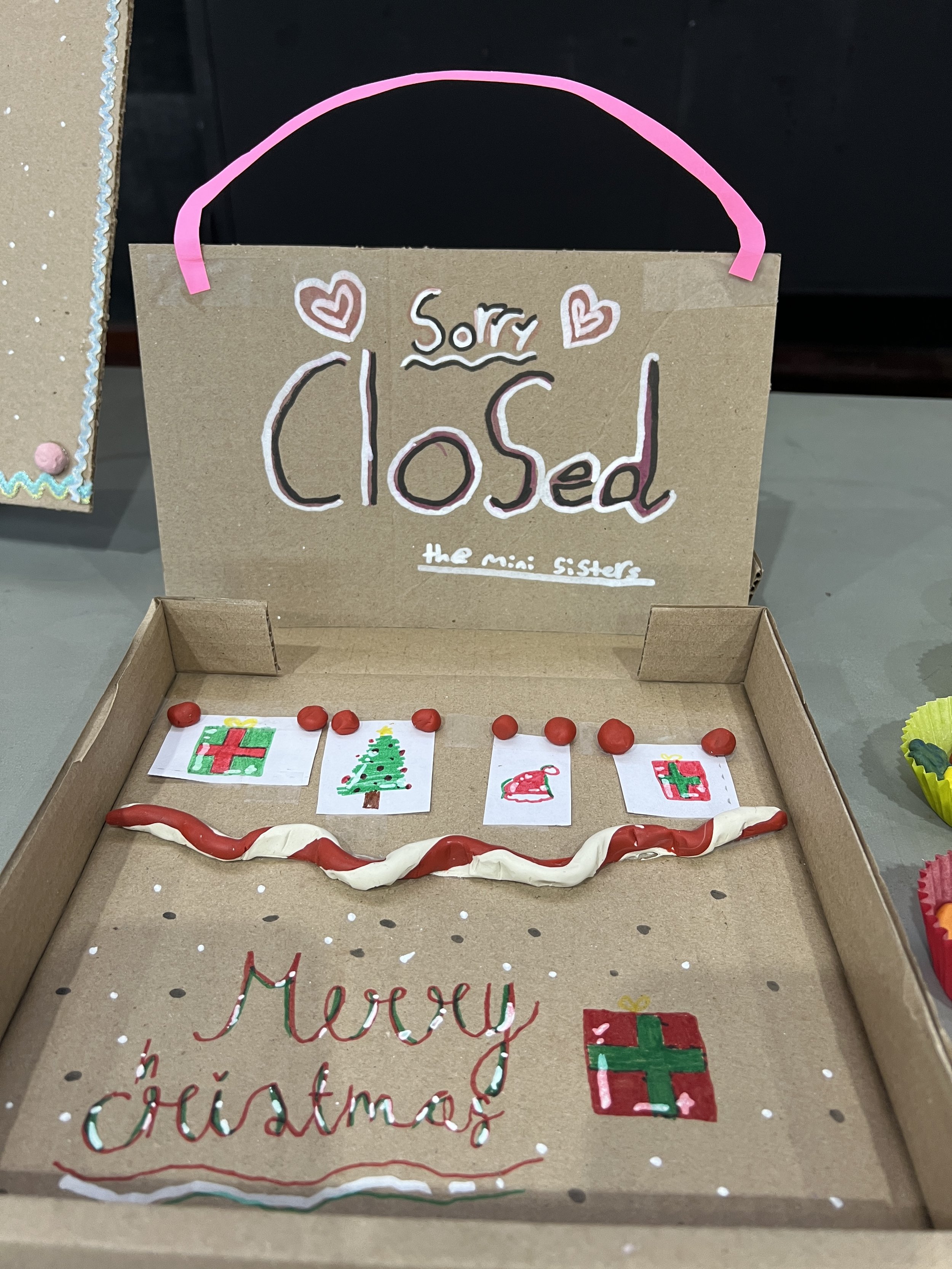
A Market Day With Community Purpose
Serving as a thought partner, IC’s Aaron encouraged the team to extend the reach of Market Day beyond the classroom walls. In a novel scenario, rather than arriving to receive play money, parents were asked to bring donated items. They brought cardboard to replenish the makerspace, or clothing and backpacks for schools in other provinces in exchange for their spending currency. Shannon describes the positive outcome: "We were really surprised at having such a fair where we collected a lot of clothes and backpacks and things that could be brought to these four schools in other provinces."
Aaron also introduced the team to Kiva, the global micro-lending platform, as a possible next step for connecting students' profits to broader communities. While incorporating this concept remains an idea in development for coming iterations, the conversation opened the team's eyes to how far the unit's reach could grow.
Real Business, Real Learning
Among the team's versatile assets is Milagros Centeno, the learning assistant for both classes, who is also a working entrepreneur with her own food service business. When the unit reached supply, demand, and responsible consumption, Mila brought her own experience directly into the classroom. Students asked challenging questions about pricing, packaging, and ethics. Mila recalls, "It was like a trigger to them to talk about so many aspects of learning at the same time. We were very surprised."
The proximity of a real business owner made the concepts feel achievable and immediate. As Mila observes, students began dreaming beyond the classroom: "I think one of the things that helped them to engage is the fact that they realized that they could do something that grown-ups do. They started dreaming and asking themselves: ‘What is going to be my product or my service?’"
Access and Inclusion by Design
Hanne Grol, in her valuable role as learning support teacher, sees Market Day as one of the most naturally inclusive units in the third-grade calendar. "This is actually the easiest unit to have everybody engaged, because it is so hands-on and it is very creative," she explains. "It's very easy for each student to find a product, a service, or a challenge that they can take on."
The unit's heavy vocabulary load is addressed through deliberate repetition and varied approaches, including memory games, Taboo-style activities, timed writing, fill-in-the-blank exercises, and previewing support for EAL students. The result, Hanne says, speaks for itself: "Nobody who left the unit [was] thinking, 'what is profit?' They were all totally into it. Because it was so engaging for them, it motivates them as well."
Ethics in Action
Perhaps the most striking evidence of the unit's success came not from a test, but from a parent's observation on Market Day itself. Shannon shares the story: "One particular dad came up to me and said, 'The kids have a really strong understanding of ethics, because I offered to give a student double the price for something they were selling, and they said ‘no’… because they had already promised it to somebody else for the base price.'"
This was not an accident. Ethics had been woven throughout the unit from the very beginning. An example of this intentionality includes a visit with the school's waste management director during which students weighed the cost difference between ethical and unethical business decisions. "Because it was woven all throughout the unit," Shannon notes, "you could see they were transferring that understanding to what we were learning in all the other areas."
Something They Will Never Forget
The lasting power of Market Day is something Silvina witnesses year after year. "I have students who are now in high school and they see me and talk about Market Day," she says. "For me, it's [remembered as] the highlight of third grade. It’s something they will never forget,” she reflects. “It's meaningful for them."
Hanne points to the pride students carry forward: "The motivation and the self-esteem that it fosters in the students. They're proud of the unit, proud of their work. I have [their handmade creations] in my room, and they come in and say, 'It's still there! You still have it!' Their confidence gets a boost from the unit."
For a team of educators committed to integration, inclusion, and community purpose, that pride is exactly the point.